Category Archive for Friends Who Want to Help

The Clean and Green Club, April 2026

<!doctype html>


Having trouble reading this as an email? Please visit thecleanandgreenclub.com to read it comfortably online.

Shel Horowitz’s Clean and Green Marketing Tip: April 2026

Great news! All of my eBooks with a publication date through 2023 are now free to subscribers to The Clean and Green Club (the monthly newsletter I’ve been publishing in some form all the way back to 1997). https://shelhorowitz.com/shels-green-products-and-services/
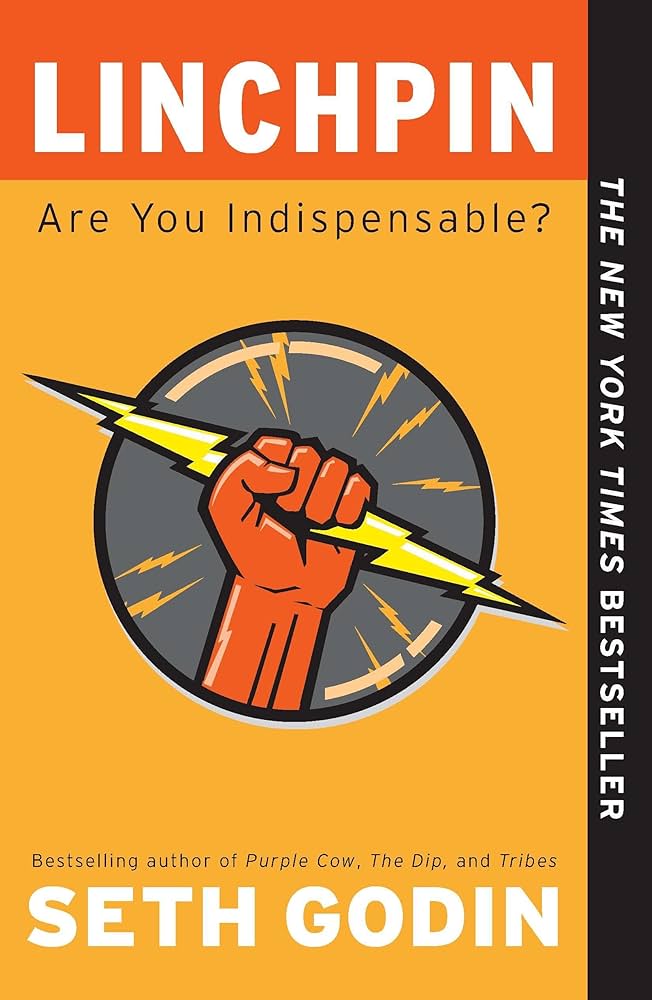
Ten “Linchpin Moments” in My Life—What Are Yours?
Asian woman using laptop
Image: Clement Eastwood via Pexels
The morning after finishing Linchpin, the book by Seth Godin I review below, I woke up knowing I need to do something really different and personal for this month’s main article: 10 times where I stepped into the potential to do something great—and because we always learn from our failures, another list of 10 “oops” situations, when I failed to step into greatness although the door was open. Hope you enjoy it.I’m not sharing this to brag—but in the hope that it inspires you to come up with your own list of times you did something great. And I’d love it if you share it with me (please 1) reply to this email so I can search by subject line, 2) tell me whether you give me permission to publish (in whole or excerpted) your response, and 3) if the answer to #2 is yes, may I include your name?As I’m using it here, “Linchpin Moments” might be actual moments, but they could also be extended campaigns: hard work that followed the momentary inspiration or grace. To Seth, even being a server at a restaurant can provide opportunities to be a linchpin. With that in mind, I’m listing mine chronologically. In some, I made a huge impact and helped change the world. In others, I simply took leadership over some aspect of my own life.

My Ten Linchpin Moments:

1. Surviving childhood rape by a stranger when I was too young to even know the word, though I felt really dirtied and had a vague sense it wasn’t supposed to happen to boys—and, over the years, drawing on resilience I didn’t know I’d had to process that horrific experience and become a strong feminist (~1968)
2. Hearing a speaker at my first Vietnam protest say that the Vietnam war was undeclared—which I hadn’t known—and understanding in that instant that I was now an activist because the system wasn’t working and the world had to change.I’ve devoted my life to social and environmental good ever since. (1969)
3. Keeping the promise I’d made four years earlier on a fishing trip at age 12—when I chose not to fish and realized that if I didn’t want to kill my own food, I shouldn’t be making someone else do it, and told my mom I was becoming vegetarian. I would have done it immediately, but she told me it would stunt my growth. We didn’t have Ecosia or Google back then to check—and I was a runty kid—so I told her I’d wait until I stopped growing. Keeping a promise at 16 that I’d made at 12 showed me I could keep my word, and that a long-term perspective is important. I’d bet that when she extracted that promise from reluctant me, she thought I’d forget all about it. (1973, and I still don’t eat meat)
4. Going off to college 600 miles away from the stairwell where I was raped and suddenly discovering my bisexuality—something that apparently couldn’t surface when that painful memory was too physically close. And even though at that time, gays, lesbians, and bisexuals were despised (and trans identity was essentially invisible), choosing to get involved with (and eventually run) the campus gay center, organize and participate in a speakers bureau, and be very publicly gay-identified. When I was running it, I focused on outreach and intersectionality. I built a partnership with the Women’s Center next door. I publicized our meetings in the newspaper of the bigger city 20 miles away. And I even had a series of meetings with the liberal but homophobic editor and publisher of the town’s newspaper about why they refused to list our meetings in the community calendar—which gave us lots of exposure because they gave extensive coverage to those meetings. I remember one of them telling me that while he had known other gay men including Bayard Rustin (co-organizer of the 1963 March on Washington), he’d never met someone who considered it normal before. While it’s common knowledge since his biopic, I hadn’t known Rustin was gay, and that was inspiring. (1973-1976)
5. On 3-month college co-ops and a year-long stay at the end of my final co-op, I co-organized the first Gay Pride block party in DC and Gay Centers in Atlanta (which survived at least another decade after I left the city) and Providence (which didn’t make it) (1975-1977)
6. Joining the early organizing of the Clamshell Alliance chapter in Rhode Island, I co-organized several actions including a “swim-in” at the beach where a utility wanted to build a nuclear power plant (and then canceled, probably because we’d begun to generate opposition)—and was one of 1414 arrested in the life-changing and world-changing Seabrook Occupation and the “university within walls” that we collectively put together during the time we were held in New Hampshire National Guard armories after the mass arrest. We had no idea at the time, but we were birthing a nationwide nonviolent safe energy movement that brought nuclear power plant construction to a near-total halt. (1977)
7. After moving to Northampton, MA, I worked with my City Councilor to pass the first nonsmokers’ rights regulations in town (and I think the third in the state)(~1983)
8. When a developer announced his plan to put 40 trophy homes on a mountain next to our beloved state park just a year after I’d moved to that neighborhood, I was appalled. Then, as I read to the end of the article where several prominent environmentalists expressed variations on “this is terrible, but there’s nothing we can do,” I got angry enough to form an organization, Save the Mountain. As I was mulling over whether I had the spoons to start this movement, a voice literally came into my head with the words, “You were put here to stop this.” After that, I had to take the reins that were handed to me. While the experts were moaning that there was nothing we could do, I got 70 people to show up for the first meeting. I became the publicity co-chair and we got about 70 print articles, a couple of dozen radio interviews, and even a few TV appearances during the 13-month campaign. We routinely brought 400+ to attend meetings and hearings on the project. We flooded the town with lawn signs and bumper stickers. And we attracted the attention of a local philanthropist I’d never heard of, who funded the state to purchase and protect the land. We also passed three new laws that make it very difficult for anyone else to build on the mountain range in town. Most importantly we changed a “you can’t fight City Hall” attitude in town into a perception that we live in a caring and progressive community that can take meaningful action. Many people got involved in town politics, ran for office, volunteered for town committees, and made some real change. (1999-2000)
9. Reflecting on the success of Save the Mountain, I realized that the campaign had not only harnessed everything I knew from 30 years as an activist, but also everything I’d learned in my career as a marketing strategist and copywriter. I started pondering what the activist world could bring to business and settled on the idea that building in strong ethics and environmental/social impact was a business success strategy. I did enough research to anchor my belief with real-
world examples and eventually wrote four books and hundreds of articles, spoke internationally, and skewed my consulting practice and this newsletter toward businesses, authors, and organizations that were creating positive impact. Writing, speaking, and consulting on that intersection of profitability and impact has been the focus of my career for more than 20 years now. (2002-present)
10. Although I’ve been sympathetic to the immigrant cause for decades, my activism had been focused elsewhere. I shifted to immigration justice by accident during the first Trump term, when my wife went to a meeting and came back all excited about going to witness at a Florida detention center holding 3000 migrant teens. I’d said I go with her if we took a vacation in Cuba afterward. I’ve been an active core member of Jewish Activists for Immigration Justice ever since. We did the witness in Florida and a few months later, a full week on the border where we met with refugees from kids to elders, advocates, and government personnel; co-taught a writing workshop for kids and then were asked to do another for their moms; observed the tent courts and the 5a.m. loading of a deportation flight; cooked food on the US side, pulled it across the border in little red wagons, and served a meal for 2500 residents of the refugee camp. Following both delegations, we actively engaged with legislators, the media, public audiences, and college classes—and I think we successfully shifted the narrative in our local area. (2019-present)
11. This one hasn’t happened yet, but I hope it will make a future top ten list: I’m working on a new book about being an activist at age 60+ and have already
begun to speak on being an activist at any age.

And Some of My Many Failures:

1. I’m still troubled by my failure to interrupt a racist comment made by a new neighbor who had invited us in to get to know us after we’d just bought our first house.
2. I’m also still troubled by my well-intended but inappropriately noncommittal teenage response to a stranger who was insulting the woman he was with and asked me for validation. I responded with something way too ambiguous when I should have just told him to stop bullying her.
3. I was never nice enough to my brain-injured older sister or my schizophrenic brother-in-law.
4. As an NYC native, I’ve had to work hard to come across as less abrasive and self-righteous, to speak more slowly and more softly, to leave space (or actively MAKE space) for others to participate in group conversations.
5. I can be impatient with people whose learning or speaking styles are different than mine.
6. There are a lot of moments where I could have been kinder, less judgmental, less moralistic.
7. I’m also still working on being more supportive to people who are in crisis, or even just upset—and to do that in ways that don’t leave me taking on their burdens.
8. I still sometimes feel gleeful when bad things happen to evil people.
9. Sometimes I’m entirely too bossy.
10. I don’t always accept responsibility for problems I’ve caused or worsened.

Looking forward to reading yours! And don’t feel any obligation to come up with your
own “oops” list.

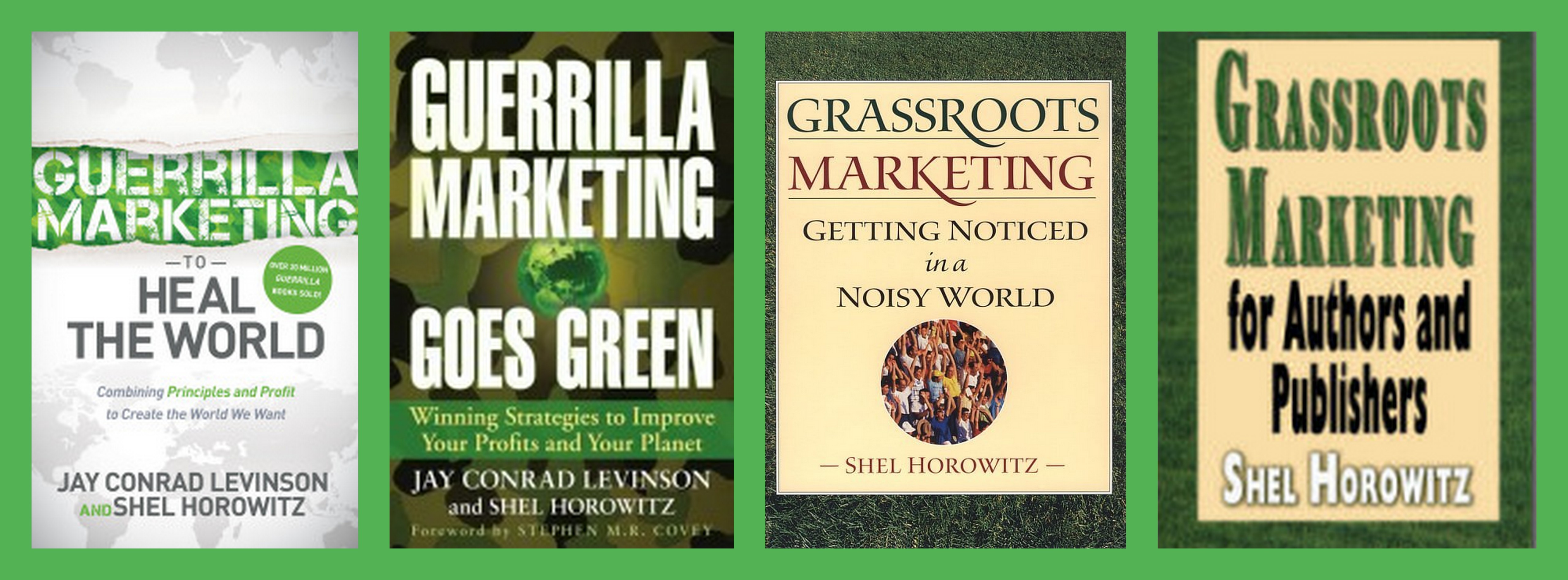
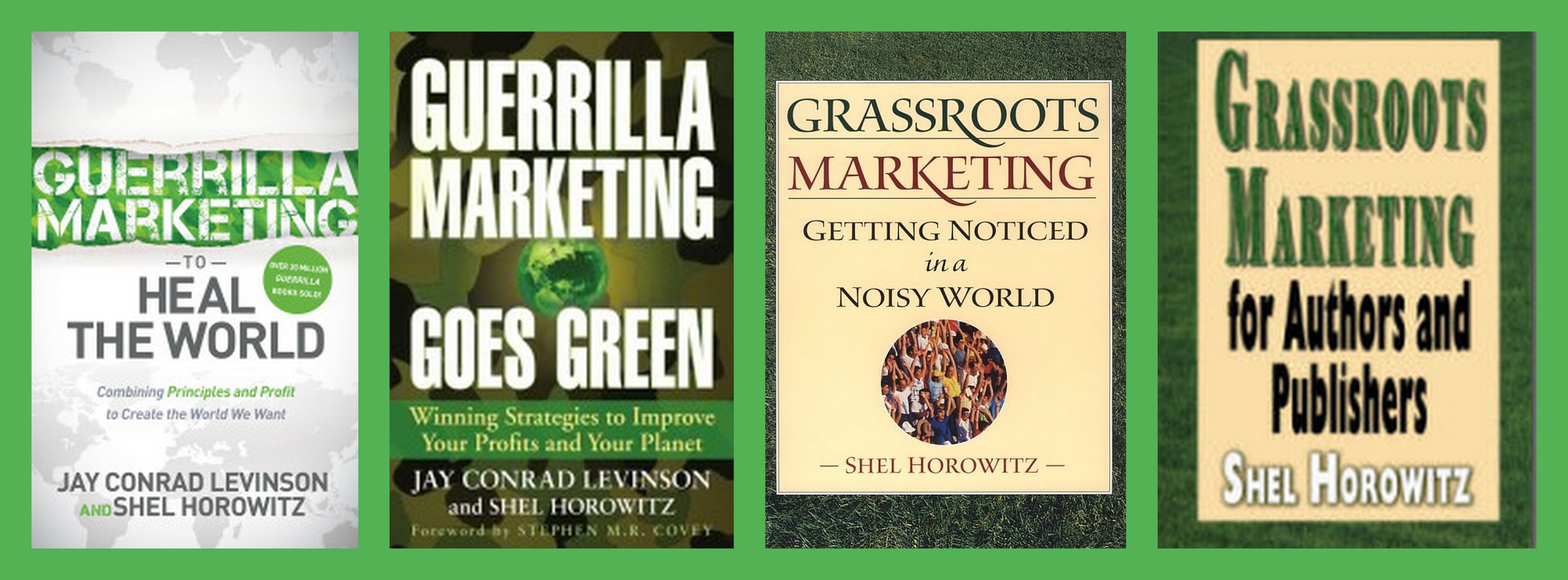
Discover why Chicken Soup’s Jack Canfield, futurist Seth Godin, and many others recommend Shel’s 10th book, Guerrilla Marketing to Heal the World (and download a free sampler). Autographed and inscribed copies available.
Wild Party Podcast with Stefanie LaHart
Stefanie LaHart’s Wild Party podcast interview just blew me away when I listened to the replay. We went so deep into activism and yet still gave plenty of space to how businesses can thrive by building in environmental and social good. And at the very end, she asked about my next project—and I got to riff on the book I’m working on about being an effective and badass activist as an elder. I think it’s the best integration of the business and activist sides of any interview I’ve done. Please visit 
https://thecleanandgreenclub.com/recent-interviews-guest-articles/ for a long list of highlights.

View highlights from (and listen to) more than 30 podcasts ranging from 5 minutes to a full hour. Click here to see descriptions and replay links.

Ellen Finkelstein and Project 2029
A couple of friends have been frustrated by not seeing progressive politicians or well-known thought leaders offer positive ideas for improving life in the United States. So we decided to create a place for anyone to post ideas on a variety of topics, such as gun violence, healthcare, homelessness, poverty, immigration, and more. And we hope people who can implement them will notice. It’s a simple site but it works.

Please post your ideas here and then share the site!
https://www.project2029.community
Linchpin: Are You Indispensable?

Hands Across the Hills

Linchpin: Are You Indispensable?
By: Seth Godin (Portfolio/Penguin, 2010)

Why would I review a thought-leader business book from 16 years ago? How is it still relevant? The business world has had such huge shifts since then: AI replacing workers; COVID and Zoom eliminating so many in-person business meetings; the resurgence of authoritarianism and foreign policies based on war and conquest in so many parts of the world; the undermining of world institutions…

I’d argue that these changes make Godin’s central thesis more relevant than ever. He argues that you can choose to be a cog in the machine, taking no initiative, doing what
you have to and not an iota more—or you can choose to be a linchpin: an indispensable person who turns even the simplest everyday tasks into art, sees the big picture, and is constantly thinking about/working toward better outcomes—even if it means breaking the rules sometimes. The cog model, he says, worked well in the 19th and 20th centuries.But as more and more tasks are turned outsourced to machines (or cheaper human labor in developing countries)—and the business world gets more and more unpredictable—staying unnoticed and unmemorable but replaceable is the opposite of a success strategy (p. 7). Indeed, linchpins wildly outperform cogs (p. 36).

Godin is an abundance thinker (and I hope you are too). Being a cog, he says, embraces a scarcity mindset; you may perceive your time as too valuable to give to an employer who doesn’t care. But scarcity mindsets lead to divisiveness and othering (pp.30-31). Meanwhile, in what he calls “the law of linchpin leverage,” the more value you create, the less time it typically takes (p. 51). Dramatic breakthroughs happen either when there aren’t any unbreakable ceilings, or they turn out to be breakable after all (p.69).

And they happen because “artists are optimists” (p. 98); they’re linchpins who see the diamond inside the plain-looking rock, see the sculpture waiting to emerge from the marble slab—and have a passion to fulfill that promise (p. 92). They make the effort not for financial rewards, but for the intrinsic rewards that quench their artistic and creative thirst (p. 78). While those intrinsic benefits frequently lead to financial rewards as well, that’s not why they do them. They’re making art, even with the most humble acts.

And the cool thing is we can all do this: “Everyone, every single person, has been a genius at least once. Everyone has winged it, invented, and created their way out of a jam at least once.

“If you can do it once, you can do it again” (p. 99).

But just as the rewards are intrinsic, so is the resistance. He devotes 40+ pages to the amygdala (lizard brain)—which was essential in the days of fight or flight but now is mostly a barrier (pp. 101-149).

Not surprisingly, mindset helps avoid the lizard brain’s traps. Successful people see a
failure as a tactic that didn’t work—and NOT as a crushing defeat that means you
shouldn’t have even tried: “You become a winner because you’re good at losing” (p.
115). Or they pursue multiple paths, so if one fails, they’re still on track for a different
one (p. 125). Or you learn how to acknowledge criticism (and your own anxiety) without being destroyed by them (pp. 138-139).

Rejecting Robert Ringer’s “Looking out for Number One” transactionalism, Godin sees
linchpins as generous artists, often creating gifts that can never be adequately repaid
(pp. 152-153). They don’t worry about people stealing their stuff. Instead of “Pay me,” they say “Here” (p. 165). They free up abundance by being frugal—which can lead to even larger surpluses (p. 166) as people recognize that you’re worth their time and energy. Your gifts build loyalty and trust while reducing price sensitivity (p. 196). And you don’t need other people to validate your status to do it (p. 201).

Small digression: I’ve never liked the Ringer approach, nor those of Milton Friedman or
Jack Welch, and I’m glad that Godin continuously reinforces that business can be much more than a source of material wealth. Far too often, businesses socialize the costs while privatizing the profits and privileges. In my book, Guerrilla Marketing to Heal the World (which Godin endorsed), I make the case that building business on positive environmental and social impact is a success recipe. If you’d like a PDF at no charge, reply to this email and change the subject line to

Please send GMHW PDF: Subscriber

(Copy and paste, so it matches exactly, please. If you use a different subject line, I’m likely to miss it entirely.)

Godin notes throughout the book that the rewards also come when you commit to doing your best, even for tasks that may not seem worth it.

Linchpins generate far more nimbleness and creativity than cogs. “The linchpin is able to invent a future, fall in love with it, live in it—and then abandon it on a moment’s
notice” (p. 204). Commitment, personal resilience, and success strategies help you get through the tough spots (pp. 207-230).

The book concludes with this wonderfully optimistic sentence: “The result of getting
back in touch with our pre-commercial selves will actually create a post-commercial world that feeds us, enriches us, and gives us the stability we’ve been seeking for so long” (p. 236). Amen!

Connect with Shel

Turn Your Sustainability/CSR Report Into Powerful Marketing!  http://goingbeyondsustainability.com/turn-that-nobody-reads-it-csr-report-into-a-marketing-win/

About Shel

Speaker, author, and consultant Shel Horowitz of GoingBeyondSustainabiity.com helps businesses find the sweet spot at the intersections of profitability with environmental and social good — creating and marketing profitable products and services that make a direct difference on problems like hunger, poverty, war, and catastrophic climate change. His 10th book is Guerrilla Marketing to Heal the World.

If you’re not already a subscriber, please visit http://goingbeyondsustainability.com and scroll to the very bottom left corner. You’ll find lots of interesting information on your way to the subscription form, too.

————–

Links in this newsletter may earn commissions. Please click here for our privacy and endorsement policy.


Powered by:

GetResponse

The Clean and Green Club, March 2026

<!doctype html>


Having trouble reading this as an email? Please visit thecleanandgreenclub.com to read it comfortably online.

Shel Horowitz’s Clean and Green Marketing Tip: March 2026

Great news! All of my eBooks with a publication date through 2023 are now free to subscribers to The Clean and Green Club (the monthly newsletter I’ve been publishing in some form all the way back to 1997). https://shelhorowitz.com/shels-green-products-and-services/
This Changes Everything About Search
Asian woman using laptop
Image: Ketut Subiyanto via Pexels

This month, I’m sharing this excellent article on how to optimize for AI query responses. This is an area where I have zero expertise, while the writer clearly knows the territory very well.


But let’s talk first about why this is a game changer—just as online search was a game changer starting the mid-90s. Until search tools like Yahoo and Excite came along, the Internet was basically useless for most of us. And it was really only when Google—with its clear interface and fast, reasonably accurate answers that got much more accurate when people queried a phrase instead of a word—began to get popular that the Net crossed into mainstream use. I don’t think that’s a coincidence.


Now, pretty much every search engine builds in an AI answer at the top of the results, and more people rely on them (perhaps because they aren’t familiar with the issues around accuracy or misleading context)—and more people are bypassing the search engines entirely and going directly to AI (mostly Chat GPT, but also hundreds of other agents).


So…we as marketers, and especially those marketers who’ve built their business on Google results, need to adapt once again.


And let’s remember that the most popular and well-branded tools are not always the best. I do most of my searches—and most of my web browsing—in Ecosia.org (which has both a search engine and a browser), because it allows me to do environmental good: every search or browser use plants a tree. 95 percent of the time, I can get the results I need, and the other 5% I go to Google (which doesn’t always give me what I’m looking for either) next. My use of AI is still limited, but I have seen too many bizarre results from GPT to trust it, so I go to Perplexity. If I’ve exhausted my freebie queries, I’ll turn to Claude. By the way, I discovered both Ecosia and Perplexity because Seth Godin wrote about them (years apart) in his daily blog, which I’ve been reading for more than a decade and strongly recommend. 


Here’s the article, which I found through John Kremer.

https://moritzfritzen.substack.com/p/aeo-for-consumer-brands?utm_source=substack&utm_campaign=post_embed&utm_medium=web

Discover why Chicken Soup’s Jack Canfield, futurist Seth Godin, and many others recommend Shel’s 10th book, Guerrilla Marketing to Heal the World (and download a free sampler). Autographed and inscribed copies available.
Sustainable Business Magazine
A good and current interview with me in Sustainable Business Magazine went live recently: https://sustainablebusinessmagazine.net/netzero/green-profitability-consultant-shel-horowitz/ 
It starts with an overview of how I got into this work, lists four benefits of building sustainability into a company’s products and services, discusses two strategies companies can use to attract atention to the good they’re doing, discusses why sustaiability initiatives are still important even when the feeral government hates them (and how the market will punish those who abandon them because they want to appease the would-be dictator), and finishes with the exciting new direction I’ve started to embark on.

Impossible Things Happen When You Do This One Thing 

(18-minute mini-presentation to the East Trade Winds networking group in Ontario: https://youtu.be/Z1hDu2_zrSI). My presentation starts at 35:05.

  • Treat the earth as a fiduciary and honor the Precautionary Principles
  • Create a virtuous circle by implementing the unique social and environmental good that supports your goals, strengths, and reputation
  • Nine ordinary people, Twelve people’s movements, and 5 technological revolutions (among many) that changed the world
  • How I started my own “impossible” movement and won the victory in just 13 months
  • Why higher purpose is good for business
  • Four paths from impossibility to success—and four doable social transformations
  • Six huge transformations that could have happened if builders adopted green technology 40 years ago
  • Messaging that’s appropriate for non-green consumers, and different messaging for the corporate bean counters
  • An easy way to conserve water
  • Six ways to reduce food waste
  • The power of win-win-win solutions from cheap solar lamps to multiple industries collaborating in a circular economy
  • 16 movements that changed society, decade by decade from the 1950s
  • The power of win-win-win partnerships
  • The benefits of a freebie half-hour consultation with me

View highlights from (and listen to) more than 30 podcasts ranging from 5 minutes to a full hour. Click here to see descriptions and replay links.

Sleep to Thrive
Sleep-deprived? Instead, jump out of bed with energy and alertness! Discover your sleep type to escape your pattern of sleeplessness. Next join Sleep to Thrive: Wake Up to Your Life!, starting in mid-March to transform your sleep and your life.

Changemakers’ Mentorship

If you’re an activist, organizer, or community leader dealing with burnout, uncertainty, or conflict — Katherine Golub’s Changemakers’ Mentorship might be exactly what you need. It’s a small group coaching program (just four people) starting in April, with three spots still open. Katherine has been leading these cohorts for ten years and offers solidarity pricing plus a free discovery call before you commit. Learn more and read a client story here.

Ellen Finkelstein and Project 2029

A couple of friends have been frustrated by not seeing progressive politicians or well-known thought leaders offer positive ideas for improving life in the United States. So we decided to create a place for anyone to post ideas on a variety of topics, such as gun violence, healthcare, homelessness, poverty, immigration, and more. And we hope people who can implement them will notice. It’s a simple site but it works.

Please post your ideas here and then share the site!
https://www.project2029.community
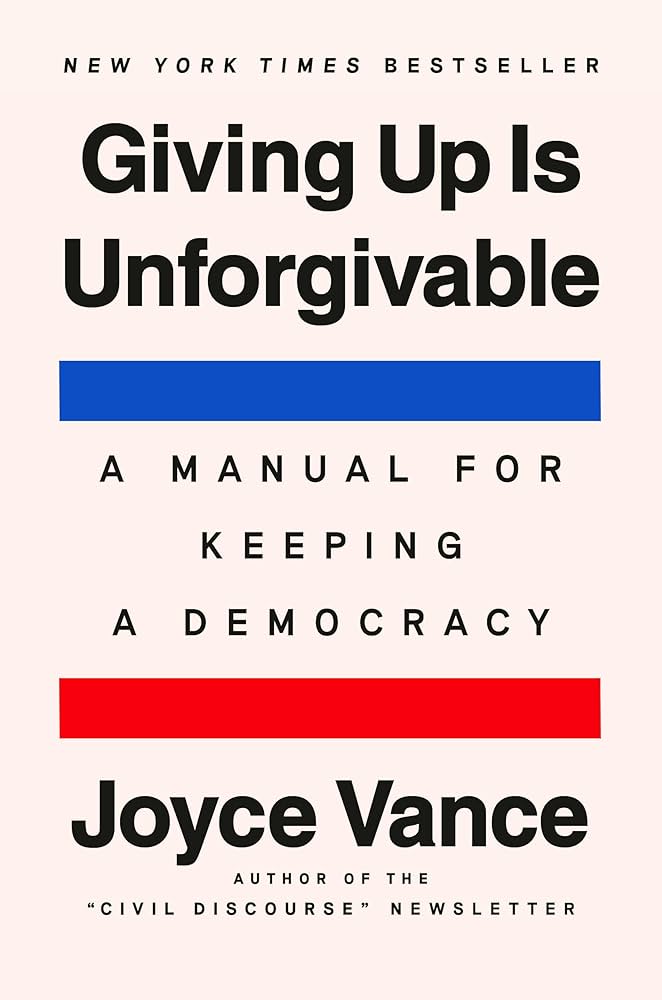
Giving Up Is Unforgivable: A Manual for Keeping Democracy

Hands Across the Hills

Giving Up Is Unforgivable: A Manual for Keeping Democracy
By: Joyce Vance (Dutton, 2025)

To create social and environmental impact businesses, it really helps to have both a business culture and government climate that supports them. Thus, I occasionally review books that are more about politics than about business, because the current US administration is actively hostile to these goals. This is one of those books.

Vance, a career prosecutor in Alabama who resigned just before the 2017 inauguration, built her subtitle and much of the book on Ben Franklin’s famous retort that the Founders had designed “A republic, if you can keep it,” and on the works of Thomas Paine and George Orwell.

It’s a quick and easy read that provides both historical and current context for the threats to democracy caused by the current administration, as well as T’s first round from 2017-21. And it’s in very good shape, especially considering that it covers well into 2025 and came out by the end of the year (most books from big publishers take a year or two to be birthed once the manuscript is turned in). Most of the rushed books I’ve experienced from big publishers are a mess. Here, I think I saw just two places where a minor grammar error slipped in—and rare is the book that does better no matter how long its publishing process. But I can probably blame the lack of an index on the rush to get it out—and that’s an unfortunate omission.

Much of the book reinforces an idea that I strongly agree with: no matter how bad things are, we can’t give up hope—because we, the people, can and do make a difference:

It’s an educated public capable of informed civil discourse that sustains effective, fair government. Accountability happens when citizens demand it. Sometimes, they must demand it loudly and persistently. This is undoubtedly one of those moments (p. 6).

[T]he practice of democracy, something we do together as Americans. When we make mistakes, even big ones, we can learn from them. We dig deeper so we can fix them. We get back to work. But what we cannot do is give up (p. 53, emphasis in original).

The orthodoxy of a totalitarian regime requires that we abandon thinking for ourselves…Don’t look away. And don’t hope it won’t happen if you close your eyes. Surround yourself with supportive people and educate yourself…The damage to the architecture of our democracy can be repaired by people of purpose. That is the task ahead of us (p. 101).

If you want to save democracy, persuade potential voters who don’t vote or don’t vote regularly, that their participation is essential (p. 133).

The book is a great mix of inspiration and concrete ideas like turning patriotic holidays (e.g., Presidents Day, Juneteenth) into public celebrations that center civics education and democracy. She has a whole chapter called We Are the Cavalry, pointing out that we are the ones who can save our threatened freedom. They attack us BECAUSE they fear our power—and the attacks will keep expanding past marginalized groups to eventually encompass all of us (p. 172)—but we can often jujitsu their attacks into media coverage and more support (pp. 149-151). And we can borrow solutions modeled elsewhere, such as Finland’s national media literacy program (p. 144).

The last few pages (the postscript) are a clarion call to action. One final quote to finish this review:

It will take all of us. It will be the small acts of protest, of resistance, of education, and of love for country that will keep the dictator from seizing control. It may not always be your turn to save democracy, but it’s always your turn to be present, to do whatever you can, and to support the people who do the work to keep the Republic. The dictator’s most dangerous weapon is his ability to overwhelm us with the feeling that we are helpless by keeping up an endless onslaught of terrible things. We can neutralize that weapon by knowing our own strength and saying no to feeling powerless…We must persist until we succeed… (pp. 172-173).

Connect with Shel

Turn Your Sustainability/CSR Report Into Powerful Marketing!  http://goingbeyondsustainability.com/turn-that-nobody-reads-it-csr-report-into-a-marketing-win/

About Shel

Speaker, author, and consultant Shel Horowitz of GoingBeyondSustainabiity.com helps businesses find the sweet spot at the intersections of profitability with environmental and social good — creating and marketing profitable products and services that make a direct difference on problems like hunger, poverty, war, and catastrophic climate change. His 10th book is Guerrilla Marketing to Heal the World.

If you’re not already a subscriber, please visit http://goingbeyondsustainability.com and scroll to the very bottom left corner. You’ll find lots of interesting information on your way to the subscription form, too.

————–

Links in this newsletter may earn commissions. Please click here for our privacy and endorsement policy.


Powered by:

GetResponse

The Clean and Green Club, January 2026

<!doctype html>


Having trouble reading this as an email? Please visit thecleanandgreenclub.com to read it comfortably online.

Shel Horowitz’s Clean and Green Marketing Tip: January 2026

Great news! All of my eBooks with a publication date through 2023 are now free to subscribers to The Clean and Green Club (the monthly newsletter I’ve been publishing in some form all the way back to 1997). https://shelhorowitz.com/shels-green-products-and-services/
How to Wake up an Audience
People making protest posters

Image: Pavel Danilyuk via Pexels

What do you do when you’re talking to a comatose audience? Here are a few things I’ve tried, and I’d love to hear what worked for you.

  1. If I’m speaking after a previous speaker droned on and on, or after several speakers with no break, I offer a guided group stretch break before I launch into my presentation. The specific words will vary depending on the audience and my topic, but it will be something like “Reach for higher objectives [or, for a business audience, higher profits] (hands in the air). Expand your client base (hands out to the sides). Down to the grass roots (hands to floor). And contract those budgets! (arms hugging chest).”
  2. In mid-speech, I will work in a humorous (and, often, spontaneous) attention-getter if I need one. I’ve been known to surprise myself. I remember doing an early morning keynote where I asked, “How many think ____ (choice A)? How many ____ (choice B)? How many aren’t thinking yet because you haven’t had your coffee?” That brought enough laughter to get people paying attention. More than a decade earlier, I was speaking about low-cost marketing to a group of building contractors. I threw away my opening at the last minute, after taking a pee break and seeing the deplorable condition of the bathroom in the divey bar this group met in. So my first words were “How many of the men here have been to the bathroom tonight? And how many of you saw the opportunity for contractors in that bathroom?” After that, I could say anything I wanted, and they were eating it up.
  3. I will actively try to meet people before the talk. When practical, I will attend the entire conference, make friends, and invite them personally to my talk. At the very least, if the previous session isn’t still going on, I will greet early arrivers to my presentation room and get them talking. Then, during the presentation, I’ll say, “Mary over there was telling me…” She will be an ally—and others will notice that I’m not just parachuting in as the expert, but making the effort to listen to attendees’ real-life situations and address them in my talk.

And what’s your best tip for waking up a crowd? Please respond without changing the subject line (or make a comment on the page) and let me know if I have permission to share your comment in a future issue—and whether you’d like it with or without attribution.

Discover why Chicken Soup’s Jack Canfield, futurist Seth Godin, and many others recommend Shel’s 10th book, Guerrilla Marketing to Heal the World (and download a free sampler). Autographed and inscribed copies available.
World Love Week
From Ken Krell: World Love Week (Feb 8–15, 2026) is a global initiative inviting people to make love and kindness visible through simple, real-world actions — called JoyDrops. It’s not a summit or a campaign — just a week where individuals, communities, and leaders leave small, unexpected acts of kindness for strangers to find. More info: https://worldloveweek.comEast Trade Winds Networking Group
I’ll be giving a short 15-minute presentation in environmental and social good as a profit strategy for the East Trade Winds networking group on Tuesday, February 10, some time between 8-9 a.m. Eastern (5-6 a.m. PT). It’s free to register for the weekly calls; here’s the link.View highlights from (and listen to) more than 30 podcasts ranging from 5 minutes to a full hour. Click here to see descriptions and replay links.

From Ellen Finkelstein:A couple of friends have been frustrated by not seeing progressive politicians or well-known thought leaders offer positive ideas for improving life in the United States. So we decided to create a place for anyone to post ideas on a variety of topics, such as gun violence, healthcare, homelessness, poverty, immigration, and more. And we hope people who can implement them will notice. It’s a simple site but it works.

Please post your ideas here and then share the site! https://www.project2029.community

The Hard Work of Hope

Hands Across the Hills

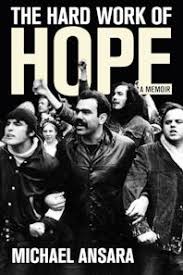
The Hard Work of HopeBy: Michael Ansara (ILR Press, imprint of Cornell University Press, 2025)

A fascinating memoir of Ansara’s organizing days in the 1960s-70s—beginning in the civil rights movement, progressing to leadership roles in Students for a Democratic Society (SDS), and later as the Executive Director of Massachusetts Fair Share, an early attempt at a multi-issue, multiclass community coalition working both in neighborhoods and throughout the state for economic justice issues like utility rate reform, affordable housing, services for veterans, and more.

Although I’m a decade younger, it’s full of stories I can relate to: movements building and crashing, coalitions forming, working for unity against factionalist pressure, continually shifting definitions of the movement, issue and demographic intersectionality, right-wing pushback, our impatience when we’re young and our resistance to change as we age, the consequences of bad or absent strategy, the occasional miracles of luck plus hard work creating success, the need to celebrate even limited victories—I’ve lived all of that, though not as intensely as he did. For instance, I’ve never been attacked by cops; he was beaten many times and had guns put to his head by some of them.

It’s also a who’s who of the movement, full of people whose names I recognize, though I only knew one (Dave Dellinger) personally.

And it’s wonderfully full of chutzpah in the service of others: the willingness to break convention and do outrageous things that people don’t expect in order to achieve results that people think you can’t get.
Some of the tactics:

  • An impromptu one-to-one debate with then-Secretary of Defense Robert McNamara, both of them standing on top of a car in the midst of a big crowd of peace demonstrators (and some pro-war demonstrators), relaying audience questions to McNamara over a bullhorn (pp. 64-66)
  • Exposing a CIA money laundering campaign that funded right-wing front groups by closely examining tax returns—including parts he wasn’t supposed to be shown (p. 70)
  • Organizing a huge demonstration that physically blocked a recruiter from Dow Chemical (makers of Napalm) at Harvard from meeting with students—and collecting student IDs from so many participants AND nonparticipants to turn over to the administration that the school could not enforce it disciplinary code against those who put their bodies on the line (pp. 90-91)
  • Going to his military induction physical with a big pile of antiwar leaflets and distributing them to other potential draftees waiting for their physicals—and quoting the Constitution and the history of colonialization in Vietnam to the sergeant and then the colonel who tried to interfere (p. 142-143)
  • Getting inside information from a mobster who incriminated a vicious and corrupt judge (pp. 186-187); that judge was eventually disbarred and forced off the bench
  • Obtaining 300 shares of Boston Edison stock from a sympathetic wealthy person, distributing them to organizers and supporters, and essentially taking over a stockholders meeting —resulting in a freeze on electric rate increases (pp. 222-223)
  • Organizing a “one-peanut-per-plate” public protest outside a major fundraising dinner, pointing out that ordinary people couldn’t afford the price of admission to gain the access that lobbyists had (p. 229)
  • Learning, over time and across many campaigns, how to deeply listen even to those you disagree with, how to uncover common ground, how to create enough pressure that governments and institutions are willing to address your goals
  • As Executive Director for several years of the broad-based community organization Massachusetts Fair Share, building coalitions that included both Black inner-city activists and the white suburban women who had opposed school busing (a super-divisive issue in 1970s Boston that made national news for months), both veterans and peace activists, and several other pairings of opposites

Yes, I’m aware that the current administration loves to break rules. But they do it for personal gain of wealth and power. Ansara and his cohort did it to create a better world.

Ansara is more than willing to criticize his cohort’s actions and strategies. He takes responsibility again and again for things he would do differently now—from not alienating veterans by marching with National Liberation Front (Vietnam communist) flags to offering an alternative organizing model to the 1968 Democratic Convention protests that turned so ugly: pressuring the Democratic candidate, Hubert Humphrey, to come out against the war and then organizing enough support to defeat Nixon. Had that happened, he believes, we might have avoided not just Nixon but the worse administrations of Reagan and Trump (I would add George W. Bush).

Connect with Shel

Turn Your Sustainability/CSR Report Into Powerful Marketing!  http://goingbeyondsustainability.com/turn-that-nobody-reads-it-csr-report-into-a-marketing-win/

About Shel

Speaker, author, and consultant Shel Horowitz of GoingBeyondSustainabiity.com helps businesses find the sweet spot at the intersections of profitability with environmental and social good — creating and marketing profitable products and services that make a direct difference on problems like hunger, poverty, war, and catastrophic climate change. His 10th book is Guerrilla Marketing to Heal the World.

If you’re not already a subscriber, please visit http://goingbeyondsustainability.com and scroll to the very bottom left corner. You’ll find lots of interesting information on your way to the subscription form, too.

————–

Links in this newsletter may earn commissions. Please click here for our privacy and endorsement policy.


Powered by:

GetResponse

The Clean and Green Club, September 2021

<!doctype html>


Having trouble reading this as an email? Please visit thecleanandgreenclub.com to read it comfortably online.

Shel Horowitz’s Clean and Green Marketing Tip: September 2021

facebook
Share
twitter
Tweet
linkedin
Share

Are You Confusing Your Market and Audience? BIG Mistake

In a recent newsletter, Chris Brogan wrote, “The other day, I tweeted out something like, ‘Hey, who here can help shiny up a sales page for me?’” and then went on to list the responses and his process of choosing who to work with. I realized even as I was writing back to him that I wanted to share my thoughts with you, too. Here’s the relevant part what I sent him. You can see the archived sales page we’re discussing (since he has indeed replaced the copy) at https://web.archive.org/web/20210507210632/https://ownermedia.leadpages.co/insider/

I L O V E “shiny it up”–nice addition to the language. I missed the post where you made that request, or I probably would have responded.

I say “probably” because your existing sales page is quite strong–at least for a word nerd like me. I love replacing the “new normal” with “New Better”–especially since I’ve been thinking hard about the opportunities to make a better world as we emerge from the pandemic. I’m sure you’ve heard that it’s too long, but that’s an audience thing. If I and people like me are your target audience, it’s not too long because it got me to read all the way through. And it felt much less lengthy when I switched from reading it on my phone to re-reading it on a computer, BTW.

I will be very curious to see what magic Sandy works. Three changes I would make would be:

  1. A MUCH stronger headline than “Small Business Owner Tools and Support”–something focused on the benefit (goal made easier and/or problem solved or at least helped) and an action step
  2. Change the five “I” bullets to “You”
  3. Spread the testimonials out instead of grouping them together (and possibly add more)
  4. Since you used Cyndi’s testimonial as a teaser early on, I’d use her entire blurb there and not repeat it later

It got me thinking more about the difference between audience and market, though–because I AM your audience, but I’m NOT your market.

I’m your audience because I love good copy, I run a microbusiness (a solopreneurship, in fact), and I encounter some of these issues in my business. But I’m not your market, because 1) I historically haven’t reacted well to online courses and tend to abandon them; 2) I can’t keep up with the firehose of information already coming my way; 3) I tend to multitask while listening to webinars and teleseminars, and if I’m paying for the content, that means I have to not multitask to get my money’s worth, and therefore there are fewer computer hours in the day to get everything else done; and most importantly, 4) I’ve already developed a bunch of support systems and networks of people I can bounce stuff off–ranging from online communities to 1:1 peer masterminds where we mentor and help each other.

Until now, writing to you, I really hadn’t thought very much about the truth that [audience and market] don’t always align even when it looks like a fit. Since I’m thinking about it now, this note is likely to evolve into my monthly newsletter main article.

Other places where a market and an audience might not match–these, I *have* thought about before–would include:

  • K-12 and college-following-right-after-high school educational settings, where the market is parents or teachers but the audience is kids
  • Services for elders, purchased by younger caregivers
  • Services provided by nonprofits working in poverty situations; their market is donors in wealthy countries, but their clients (the audience) are individuals with zero disposable income and little infrastructure
  • Corporate B2B sales where the decision-makers are not the users

What’s new and different about *this* conversation is the situation where the audience is almost the market, but non-obvious factors get in the way. So thanks for the insight ;-).

And here’s the relevant part of his reply to me:

There’s quite a lot of food for thought in here so thank you for that. We both agree that a new better might be much better than a new normal.

If you’re curious about what his copywriter did, visit https://ownermedia.leadpages.co/insider/ . The version I’m looking at begins,

Owner Insider

“WAIT, WHAT? THERE’S A MEMBER COMMUNITY AT OWNER MEDIA?”

If you’re seeing something different, you can see if Archive.org has that one (paste the above URL into the search field on that site). As of the day I’m writing this in August, the most recent Archive copy is the May 7 version that begins “Small Business Owner Tools and Support.”

Next month, I’ll give you my response to Chris’s “Shiny up” new sales page.

facebook
Share
twitter
Tweet
linkedin
Share

Discover why Chicken Soup’s Jack Canfield, futurist Seth Godin, and many others recommend Shel’s 10th book, Guerrilla Marketing to Heal the World (and download a free sampler). Autographed and inscribed copies available.

Are you ever stuck on the hamster wheel, just barely getting by? What if I told you there are always ways to create more impact, more income, and more freedom?

>Maybe you’ve seen others thrive and asked yourself, “Why can’t I create those kinds of results? How do I figure out what the cutting-edge experts are doing?”

Well, if you’re like my friend Christine Schlonski, you get a bunch of these super successful, heart-centered experts and authorities together and ask! She won’t even charge you to hear our answers, if you listen live to her Profitable Coach Summit. But it’s not just for coaches. Any entrepreneur will benefit.

You might recognize some of the speakers’ names–Milana Leshinski, Jeannie Spiro, Dan Janal, and many others–and, of course, Christine herself. She is not only brilliant, she’s also a lot of fun to be around. Plus, all of these strategies are heart-centered; they’ll feel right from the get-go.

Get your complimentary ticket to The Profitable Coach Summit here: https://ci340.isrefer.com/go/PCS/shelhoro/

The best part is, these sessions will give you guidance and insights on how you can become a profitable coach with the impact and freedom you desire.

Here’s just a taste :

  • How to Create a Business That Feeds Your Soul and Your Wallet
  • The World’s #1 Media Coach Will Show You How To Generate Top-Tier Media Coverage (without paying anything for it)
  • Turning Webinars on Their Heads: How to increase interaction and conversion with shorter, story-based presentations.
  • Converting LinkedIn Content and Connections to Conversations
  • The Four Sales Languages
  • Small Events, Big Back End: How To Build a 7–Figure Business With Retreats & Mastermind Groups
  • How To Triple Revenue In One Year With 3 Simple Steps
  • MY TALK: Finding the Profit in Purpose and the Purpose in Profit: The Sweet Spot Where Profitability, Social Change, and Healing the Planet All Intersect
  • And many more…

==> https://ci340.isrefer.com/go/PCS/shelhoro/ for your no-charge ticket, then tune in September 21-26.

PS–if you can’t make all the sessions, there is an upgrade package to get all the recordings.

View highlights from (and listen to) more than 30 podcasts ranging from 5 minutes to a full hour. Click here to see descriptions and replay links.

facebook
Share
twitter
Tweet
linkedin
Share

Sell with Authority: Own and Monetize Your Agency’s Authority Position

Sell with Authority: Own and Monetize Your Agency’s Authority Position by Drew McLellan and Stephen Woessner (BookPress, 2020)

Don’t be put off by the subtitle if you don’t happen to run an advertising or marketing agency. While the book markets itself to ad agency owners, the authority strategy is far broader. I actually tried to think of an industry vertical where an authority strategy couldn’t work, and I failed. When I think of toilet paper, I think first of Marcal and its authority strategy around forest preservation…when I think of transportation, I think about the way Toyota and Tesla made electric cars a status symbol in vastly different markets—by positioning their customers as authorities in combining functionality (Prius) or performance/luxury (Tesla) with environmental responsibility: customers who were smart enough to be pioneers in our brave new path to a clean future. In agriculture, I think of the hundreds of organic foods businesses that use their packaging to educate consumers and position themselves as authorities on healthy eating and healthy land use.

So…what’s an authority position? According to McLellan and Woessner, you pick a niche, which could be driven by your industry slice, your audience, or the problem you solve (p. 31). In a Venn diagram, your niche is the intersection of several circles, as on the cover and on page 36, where the intersection is agencies—we’ll substitute “businesses”—with your expertise, those who “give a rip,” and those with your unique point of view. That intersection is tiny slice of a huge pie, and if you define it properly, it may only have one dot in the intersection: YOU! People who need your exact expertise, benefit from your point of view, and see that you actually care will discover that hiring your company is the only choice.

But I’d a add a caution: make another Venn diagram to establish market viability: One circle for who needs your expertise (and your solutions), another for who is aware of you or can become aware after minimal exploration, and a third for who is willing and able to pay for that expertise. THAT intersection is your actual potential market, and it should be a lot bigger than a single pinpoint.

I made the mistake of not doing this research 25 years ago when I released my book on how to have fun cheaply. It turned out the frugalists who wanted information on how to legally and ethically see entertainment for no-cost, travel for a fraction of the usual place, and find dating options that cost little or nothing didn’t want to pay for that information—and despite consistent national publicity (including ABC News, the MSN home page, and Redbook, among many others), it took me 8 years to sell through a 2000-copy print run of a $17 book.

You develop a detailed and unique point of view on the issues in that niche (pp. 37-43), perhaps asking how your clients are missing the mark (p. 41). Next, you develop a single content “cornerstone”: a central marketing strategy including the six building blocks on page 51. Something like a book, a regular podcast or blog—that consistently gets you in front of prospects who welcome those messages, that plays the long game—that both helps your audience (of actual prospects) get better at their task and deepens your connection with them. Once one cornerstone is firmly established, you can add a second.

From the cornerstone, develop “cobblestones”: little drips of enticing content that engages, informs, and brings people into your orbit.

In other words, everything should be strategic. As you develop your cornerstone content, you get to play journalist. Call your prospects, invite them to be interviewed, and then turn snippets of the conversation into cobblestones that promote them—and you.

Strategically maximize your efforts with everything from adding captions to all your videos (p. 70) and loading them natively into not just YouTube but other platforms including LinkedIn and Facebook (p. 137) to turning clients and prospects into marketing partners (p. 112), to detailed rinse-and-repeat recipes for getting the most exposure from every effort (pp. 156-165), and even a list of software tools they use.

Each chapter has one author, by the way: a very easy way to collaborate on a book.

Connect with Shel

facebook
twitter
linkedin

Turn Your Sustainability/CSR Report Into Powerful Marketing!  http://goingbeyondsustainability.com/turn-that-nobody-reads-it-csr-report-into-a-marketing-win/

About Shel

Speaker, author, and consultant Shel Horowitz of GoingBeyondSustainabiity.com helps businesses find the sweet spot at the intersections of profitability with environmental and social good — creating and marketing profitable products and services that make a direct difference on problems like hunger, poverty, war, and catastrophic climate change. His 10th book is Guerrilla Marketing to Heal the World.

If you’re not already a subscriber, please visit http://goingbeyondsustainability.com and scroll to the very bottom left corner. You’ll find lots of interesting information on your way to the subscription for, too.

————–

Links in this newsletter may earn commissions. Please click here for our privacy and endorsement policy.


Powered by:

GetResponse

The Clean and Green Club, August 2020

<!doctype html>


Having trouble reading this as an email? Please visit thecleanandgreenclub.com to read it comfortably online.

Shel Horowitz’s Clean and Green Marketing Tip: August 2020

Share
Tweet
Share

4 Tips and One Resource to Interest Reporters—and Get Press

Recently, a front-page story in the best position (upper right corner) ran in my local paper. It was about a certain candidate in my town who had spent 16 times as much on the election as any of the other three candidates in the race, and seven times as much as the other three together. The campaign finance filings are public records, and I’d reviewed all four candidates’ statements.

Not coincidentally, I had contacted this reporter (whose beat includes my town) a few days earlier and suggested there might be a story here. I was involved in the campaign committee for one of the other candidates. Independently of me, the candidate I supported also contacted him.

This is what I said on a Saturday: “I think Brenda F. has set a record for most expensive town office campaign in Hadley’s history, at $18,445.79 (It might be $18,495.79–her handwriting is ambiguous). She spent $11K on Darby O’Brien to write copy… She spent what looks like $4120 on four Gazette ads, plus a later expenditure, separately itemized, of $889.90 for “personal ad reflective of the campaign” (it’s on the last page, all by itself), whatever that means. Also around $900 on three batches of signs, and $1537.37 to print one of her mailers (I think she did three). The other mailers don’t seem to be accounted for, and neither is her postage to mail them. So the $18.4K might actually be an undercount. Considering she’s trying to position herself as the frugal candidate, it’s pretty ironic that she spent 16x as much as Jane Nevinsmith. https://www.hadleyma.org/town-clerk/pages/campaign-finance-reports ”

And this is what he published the following Wednesday: https://www.gazettenet.com/Hadley-candidate-pours-money-into-Select-Board-candidacy-34297424 

Let’s look at the story angles I crammed in to that brief outreach message:

  • Probably the most expensive campaign in the history of a town that is more than 350 years old
  • Used an outside consultant (something not generally done in town elections here)
  • Her true politics are not reflected in the public messaging

This article may have made a difference in the election outcome.

How can you seize an opportunity like this?

Think like a reporter and know the story angles a reporter will find interesting.

Make the reporter’s busy life easier—in this case, I gave the reporter the link to the relevant public records: the campaign finance reports of the four candidates. I also did some easy math to figure out the spending ratios of the candidate who was trying to essentially buy her seatto the others.

Develop contacts ahead. This particular reporter and I have known each other for more than 20 years. He provided much of the coverage of a big movement I led in 1999-2000. He often seeks me out for my take on town issues, and I feed him material that could become stories.

Have multiple people contact reporters

Use HARO, a no-cost service that matches journalists looking for story sources with sources who want publicity. I’ve just put together an ebook on how to get press, and especially how to capitalize on HARO (see “Instead of a Book Review,” below).

Share
Tweet
Share

Discover why Chicken Soup’s Jack Canfield, futurist Seth Godin, and many others recommend Shel’s 10th book, Guerrilla Marketing to Heal the World (and download a free sampler). Autographed and inscribed copies available.

View highlights from (and listen to) more than 30 podcasts ranging from 5 minutes to a full hour. Click here to see descriptions and replay links.

Send News Releases at No Charge — 10-Day Pass
Pleased to pass this offer for ten days of unlimited press release distribution from Mitch Davis, a PR innovator I’ve known and worked with for many years. Mitch puts together the Yearbook of Experts to make it easier for media to find sources, and also certifies speakers through the International Platform Association, which traces its roots back to its founding in 1831 by Daniel Webster.You get full use of their press room system for 10 days, for yourself, clients or friends – each entity needs their own account – accounts can’t send releases about others.Your news releases go out six ways (and you get permanent links to share in social media):

  • Syndicated to Google News.
  • Pushed to Lexis.com–the leading professional search resource.
  • Shown in your Press Room page.
  • Shown in search on all your topics.
  • As unique search engine optimized pages.
  • With RSS feeds you can pull into your social media accounts

The ExpertClick press room system gets rave reviews:

  • USA Today called the site: “A hot site”
  • PRWeek wrote: “a dating service of PR”

….or you can upgrade and keep all the press room benefits and keep sending news releases, and save 15% if you upgrade before the 10 days are over: http://www.NewsTip.com/Refer/Guest_Shel_Horowitz .

— See the member benefits at the Join page at: www.ExpertClick.com/join
Rates start at $59 a month.

Join at no charge today at:
http://www.NewsTip.com/Refer/Guest_Shel_Horowitz
———————–

Not a friend, but I came across this interview with a naming expert and had to share it with you. As a Canadian living in Australia, she has a very different perspective. https://www.sourcebottle.com/blog/WHATS-IN-A-NAME

Share
Tweet
Share

Instead of a Book Review This Month: More about my New Ebook, “Generate Thousands of Dollars in Publicity Without Spending a Cent—By Connecting With Reporters Actively Seeking People to Interview, The Right Way”

All the way back to the 1970s as a 15-year-old high school student, publicity has been one of my favorite parts of the marketing tool kit. Why is publicity so great?

  • It provides all-important 3rd-party credibility: a trusted source says you’re worth some attention
  • Unlike advertising, you don’t have to pay for the insertion
  • The more frequently you’re quoted, the more credibility it brings you
  • The more prestigious the media outlet, the more credibility it brings you

I’ve been quoted or featured multiple times each in the New York Times, Wall Street Journal, Christian Science Monitor, ABC TV News, Redbook, Reader’s Digest, and many other top-tier media. I’ve also been featured on hundreds of obscure podcasts and radio shows, small publications, and blogs. I do at least 30 interviews in a typical year, 50 or more if I’ve got a new book out.

Would you like to tap into this kind of publicity goldmine?

You can get publicity dozens of ways. My top choice is to respond to reporters who have posted that they’re actively looking for sources for a story they’re working on. It’s so much easier to get press by giving a journalist the exact information they need to write a story than to “spray and pray” by sending press releases or cold-calling.

Several services match journalists with story sources—and most of them don’t charge anything. There’s one called HARO, also known as Help A Reporter, that I’m particularly fond of. I put time aside three times every weekday to look over the queries and respond to the ones that could benefit me.

But here’s the thing: I’ve forwarded reporters’ source queries to friends many times. And when I see their responses, I often cringe. I got tired of cringing, so I wrote an ebook on how to answer those queries the right way. In 39 pages, it serves up…

  • Information on why query responses work so much better than press releases
  • How to sign up for the notifications
  • A 10-step process for writing effective HARO query responses
  • Five actual queries (by me and three other people) that resulted in coverage in Reader’s Digest, the Toronto Globe and Mail, and elsewhere—with analysis of why they worked and how some of them could have been even better
  • Detailed analysis of a first draft of one of those responses from a client of mine, and how I talked him out of sending it in favor of the successful rewrite
  • Three queries that failed, and again, detailed examination of why
  • Three bonus reports: How to Write Press Releases that Actually Get Media Coverage—and Your Prospects’ Attention (incudes 10 full or partial actual “story-behind-the-story” press release examples); Ten Other Services That Get You in Front of Journalists and Show Producers; and How to Get Superstars to Endorse Your Book—discussing some of the ways I’ve gotten endorsements or guest essays from Chicken Soup for the Soul co-creator Jack Canfield, futurist Seth Godin, Cynthia Kersey (author of Unstoppable and Unstoppable Women), Frances Moore Lappe, author of Diet for a Small Planet, and the founder of the Guerrilla Marketing concept, Jay Conrad Levinson (who later co-authored two books with me).

This very useful addition to YOUR marketing toolkit is just $7.95, delivered instantly as a PDF. Get your copy at
https://shelhorowitz.com/product/generate-thousands-of-dollars-in-publicity-without-spending-a-cent/

Connect with Shel

Turn Your Sustainability/CSR Report Into Powerful Marketing!  http://goingbeyondsustainability.com/turn-that-nobody-reads-it-csr-report-into-a-marketing-win/

About Shel

Speaker, author, and consultant Shel Horowitz of GoingBeyondSustainabiity.com helps businesses find the sweet spot at the intersections of profitability with environmental and social good — creating and marketing profitable products and services that make a direct difference on problems like hunger, poverty, war, and catastrophic climate change. His 10th book is Guerrilla Marketing to Heal the World.

Links in this newsletter may earn commissions. Please click here for our privacy and endorsement policy.


Powered by:

GetResponse

The Clean and Green Club, July 2020

<!doctype html>


Having trouble reading this as an email? Please visit thecleanandgreenclub.com to read it comfortably online.

Shel Horowitz’s Clean and Green Marketing Tip: July 2020

Share
Tweet
Share

Reading an article on the Singapore-based Eco-Business site (often a wealth of fresh thinking to my American eyes) called “Build Back Better,” about ways we can mitigate the climate crisis as we reopen, I got the idea to start a community on the theme of building back better—but not just for climate change. I envision a portal with resources and ideas to create better futures in criminal justice/policing, nonviolent defense, equitable housing, transportation, community food self-sufficiency, education, the work world, democracy… There’s a ton of great stuff out there, but I’m not aware of a one-stop resource that crosses silos and disciplines, reaches people with a wide range of passions, interests, skills, and demographics, and has the power to create change. I put up a blog post about what this might look like, including a call for several different types of volunteers. Interested? take a look at https://greenandprofitable.com/build-back-better-lets-start-a-movement/

Don’t Poke Your Eyes Out Before You Take Your Road Test

On a discussion group, I saw a note from a small publisher grousing that nobody told her how hard the marketing would be, that she’d spent $20,000 on her websites and getting the book designed and the first 100 copies printed, but had sold exactly two books. She’d just put another $3,000 into advertising. She didn’t discuss what it cost to translate the book into three other languages and publish again.

I went to her website. I am betting that the $3K will also be wasted.

But I can’t feel too sorry for her. I don’t understand why anyone would sink that kind of money into a project without doing the most basic research into why and how people buy books. It’s like taking your driving test after you’ve deliberately poked your eyes out. It’s hard to imagine any outcome other than failure.

Look at the two screen shots—and know that these are the whole thing. There’s no other content on the pages.

Can you spot the mistakes?

Here are a few I came up with in a very short visit to the site:

  • The cover looks like it was designed for a textbook around 1952.
  • For a consumer audience, the title needs to state a point of view and/or a problem/solution. Something like How Your Lymph System Could be Sabotaging Your Health—and How to Turn it From Enemy to Ally (note: I have not read the book and have no idea what the book advocates, other than this statement in the original note I saw:
    “For me the decision to write a book was prompted by two factors – first, that I had upended a conventional medical belief, and second, that part of the data I used to do that was not available to anyone, anywhere. Part of the source material which was unavailable came from an ancient text from the late 1700’s. If you could find the book to purchase, it would have cost 5,000 pounds. My obsession with the lymphatic system was coming from a completely different place than medical professionals – and I developed methods to manipulate the deeper lymphatic system externally, unlike others who do lymphatic drainage massage.” Lymphatic Anatomy: Ancient Art, New Directions tells the reader nothing.
  • There is no selling copy whatsoever. Nothing about who it’s for, why it’s important, how it will help the reader, what kind of research went into it, the authors’ credentials (other than the secondary author is an M.D.)…nada!
  • If the book is designed for ordinary consumers, the $125 pricetag is a nonstarter. If it’s aimed at medical professionals, the price is not a big issue but the nonstarter is the main author’s lack of credentialed expertise. And we don’t have any idea of what kind of role the secondary author, who is a doctor, brought to the project, or what that doctor’s relevant credentials are. We don’t even know anything about why Chinese medicine is germane.
  • No third-party credibility. No reviews, no testimonials, no case studies accompany the visual presentation of the book. It’s supposed to stand on its own and convince people to buy, on the “strengths” of the terrible cover, the high price point, and the lack of any reason to buy.

Whatever product or service you’re offering, don’t make these kinds of mistakes! Your marketing has to make sense, and so do your product and your pricing. You have to know who your audience is, how to reach them, and what messaging will resonate.

If you’re unsure, call in a professional. I have a few slots left for new clients. If your product is a book, I’m an experienced book shepherd and book marketer who can help you produce a quality product, keep you from making expensive mistakes, and help you find skilled, affordable vendors. If you run a green or social entrepreneurship business, you’ve found your expert in that realm as well. If you’re in a different industry, I may or may not have industry expertise but can certainly help you with the marketing. Eight of my ten books are on marketing, and only Grassroots Marketing for Authors and Publishers is industry-specific. Four of those books are specifically for green and social change companies/organizations.

Share
Tweet
Share

Discover why Chicken Soup’s Jack Canfield, futurist Seth Godin, and many others recommend Shel’s 10th book, Guerrilla Marketing to Heal the World (and download a free sampler). Autographed and inscribed copies available.

Tomorrow (July 16) is the final day of Mari-Lyn Harris’s Kindness Matters virtual summit. I’m debuting a brand new talk, “Making Kindness Profitable,” at 5:35 p.m. EDT/2:35 p.m. PDT, with Q&A to follow. The whole conference looks terrific; if you open this today, you may want to check out the earlier sessions: https://heartatworkonline.org/speaker-schedule-kindness-matters/

Insight-packed five-minute interview by Mitchell Levy https://www.thoughtleaderlife.com/thoughtleaderlife/thought-leader-life-455-guest-shel-horowitz/

Back in March, I responded to a reporter query on corporate social responsibility (one of my fortes). I just received a note from the reporter that the story was published late last month, and I was very pleased with the way it came out. I talk about one of my favorite examples, a company that addresses poverty, the environment, and quality of life all at once, through solar LED lights. And I enjoyed reading the examples other experts provided, too: https://blog.submittable.com/csr-examples/

Also quoted in some depth on whether socially conscious advertising is a good thing. Not surprisingly I argue that it is, and back up my claim with facts: https://www.verywellmind.com/does-socially-conscious-advertising-work-4847116

View highlights from (and listen to) more than 30 podcasts ranging from 5 minutes to a full hour. Click here to see descriptions and replay links.

Join 4x #1 International Bestselling author Teresa de Grosbois & Co-host Pam Bayne for a 2-hour live fully interactive clinic you’ll do exercises aligned with where you’re at in creating and writing your book. We’ll be live-polling the attendees to see where you’re at right now and what you need to get your #book #completed. https://www.retreathostingcostarica.com/writers-clinic

Share
Tweet
Share

The 100% Solution: A Plan for Solving Climate Change

The 100% Solution: A Plan for Solving Climate Change, by Solomon Goldstein-Rose (Melville House, 2020)

At age 22, Solomon Goldstein-Rose served a term as the State Representative for a district that borders mine. He left the legislature to work full time on climate change, and he and I have had many climate discussions over the years. When I found out he’d released a book, I asked for a review copy.

The title would be more accurate if it said “Solutions”, not “Solution”; Goldstein-Rose’s whole point is that if we break up the causes of climate chaos into separate industries and sectors, multiple solutions can be woven together to create a carbon-neutral or even carbon-negative world: a meta-solution with many components woven together into a coherent approach, where no single approach could come anywhere near eliminating 100% of atmospheric carbon. He even gives percentage ranges that each can theoretically accomplish.

The well-researched book offers four questions to evaluate carbon remediation strategies (pp. 21-22):

  • Is it cost-competitive?
  • Can it scale up fast enough?
  • Does it rely on mandates to industry or on individual choices? Mandated behavior change will be a lot faster—but in MY opinion, encounter more hostility.
  • How much lifestyle change will it require? The more change, the lower the rate of adoption.

Also five pillars for addressing carbon globally (p. 4, explored in detail with a chapter for each, pp. 83-195):

  1. (Clean) electricity generation
  2. Electrification of processes now powered by carbon-intensive fossil fuels
  3. Synthesized fuels
  4. Non-energy shifts
  5. Carbon sequestration

Pillars 1 and 2 are all about getting our electricity generation as clean as possible, and then switching many energy-hogging activities to that clean electricity. Pillar 3 is about switching to carbon-free artificial substitutes for systems that really need concentrated, consistent energy (jet airplanes, for instance, p. 125). Pillar 4 covers the impact of industries like agriculture, logging, and cement. And Pillar 5 extracts carbon from the air and puts it, quite literally, “where the sun don’t shine”—usually deep underground.

In general, while I have concerns about the environmental and social impacts of several of his recommendations, I basically approve of his approach and am grateful for his meticulous number-crunching and numerous references (which would have been even better if the book had an index).

But there’s one “solution” he gives a lot of weight to that I am convinced is a serious mistake: He’s strongly in favor of nuclear power (pp. 96-105).

I’ve already made the arguments against nuclear power, many times. You can find a condensed version in the brief update I wrote for a new Japanese edition of my first book, Nuclear Lessons, following the Fukushima meltdown in 2011: https://goingbeyondsustainability.com/wp-content/uploads/2017/06/Nuclear-Lessons-Intro-2011-2017-tweak.pdf 

There’s also one potential 6th pillar he dismisses that could make up for not using horrific, unsafe, toxic nuclear technology: He almost completely ignores conservation/efficiency, other than calling them a distraction (pp. 41-46) and only hinting at the significant positive contribution they make on pp. 200-201. There’s also a passing reference (p. 147) to eating less meat as a way of reducing carbon impact (which, as a vegetarian since 1973, I certainly endorse—but as just one conservation step among many).

The research on conservation and efficiency is clear. We’ve already cut our energy use drastically by switching from incandescent to LED lighting, insulating our buildings, etc. But that’s only the beginning. The US still uses well more than twice as much energy per capita as, say, Denmark or Britain—places that offer comparable or better quality of life by most metrics.

And by designing systemically and holistically, there are far more opportunities to conserve. For example, when the Empire State Building underwent a “deep-energy retrofit” several years ago, it achieved energy savings of over $4 million per year, with just a three-year payback. Multiply by billions of buildings, and we begin to see what’s possible. As Amory Lovins, founder of Rocky Mountain Institute (a major player in the Empire State Building project), notes (in this admittedly dense article), when we have different energy efficiency systems working together, we can gain exponential energy savings. And that translates to vastly lower carbon footprint. I discuss Lovins’ amazing work in much more accessible language in my latest book, Guerrilla Marketing to Heal the World, along with several other equally amazing “practical visionaries.”

Connect with Shel

Turn Your Sustainability/CSR Report Into Powerful Marketing!  http://goingbeyondsustainability.com/turn-that-nobody-reads-it-csr-report-into-a-marketing-win/

About Shel


Speaker, author, and consultant Shel Horowitz of GoingBeyondSustainabiity.com helps businesses find the sweet spot at the intersections of profitability with environmental and social good — creating and marketing profitable products and services that make a direct difference on problems like hunger, poverty, war, and catastrophic climate change. His 10th book is Guerrilla Marketing to Heal the World.


Links in this newsletter may earn commissions. Please click here for our privacy and endorsement policy.


Powered by:

GetResponse

The Clean and Green Club, November 2019

Having trouble reading this as e-mail? Please visit www.thecleanandgreenclub.com to read it comfortably online.
Like Twitter Pinterest GooglePlus LinkedIn Forward
Shel Horowitz’s Clean and Green Marketing Tip, November 2019
This Month’s Tip: How Can Fractionalism Reinvent Your Business?
Like Twitter Pinterest GooglePlus LinkedIn Forward

Chris Brogan’s newsletter recently contained a PS offering his services as a “Fractional CMO” (Chief Marketing Officer, shared among several companies according to their need).” I’m a great believer in cross-pollinating ideas from different industries and immediately started investigating whether I could market myself as a “Fractional Chief Sustainability Officer.”

I think I first came across the idea of fractional resources in 1975, when I discovered that a small intentional community in Yellow Springs, Ohio (where I went to college) had chipped in on a communal tractor instead of every household buying a separate lawnmower. And when I moved to an intentional community in Philadelphia five years later, the community had two cars available as needed for a per-mile fee (decades before Zipcar, Uber, or Lyft). Their motivation was as much reducing their environmental impact as saving some bucks, and I was struck by the way a co-op in any sector could achieve both goals.

Within the corporate world, the idea of fractional shared resources has been around at least since all those timeshare condos started springing up in the 1980s. Now, you can buy fractional interests in private jets, industrial equipment, and other things. I used this model (but not this language) in 1987 to organize a co-op of four business owners that purchased a laser printer together, back when they retailed for $7000. I found a remaindered one for $4500 and since I did the research and organized the fractional purchase, the printer lived in my office.

I had already been renting time on someone else’s laser printer, at a dollar a page. Having the machine on-site was a game-changer for my business because I could now offer while-you-wait resume services, and that gave me enormous competitive advantage in that portion of my business. I was eventually able to stop typing term papers and move on to far more interesting and better paying work as a marketing copywriter for individuals and small businesses/community organizations. This in turn gave me the space to develop much deeper levels of marketing consulting and eventually focus on green and social change businesses. So, in a sense, the business I operate today was made possible, or at least vastly easier, because of that decision to buy that printer fractionally.

How might your organization use a shared-resource model to lower costs and environmental footprint?
New on the Blog
Hear & Meet Shel

View highlights from (and listen to) more than 30 podcasts ranging from 5 minutes to a full hour. Click here to see descriptions and replay links.  
Friends Who Want to Help
I fell in love with Debbie Allen’s Shameless Promoters brand when I came across it in the early 2000s. I got mentioned in her first book, Confessions of Shameless Self Promoters, in 2005, and then she included a whole chapter from me in the sequel, Confessions of Shameless Internet Self Promoters. Here’s what she told me about her newest one, which launches today:

“Finally, a ground-breaking book that reveals the no-nonsense reality and shameless secrets about success! My 9th book, published by Entrepreneur; Success is Easy: Shameless No-Nonsense Strategies to Win in Business.”

Buy the book today and get amazing bonus gifts (including one from me): http://www.successiseasybook.com/bonus

Discover why Chicken Soup’s Jack Canfield, futurist Seth Godin, and many others recommend Shel’s 10th book, Guerrilla Marketing to Heal the World (and download a free sampler). Autographed and inscribed copies available.

Turn Your Sustainability/CSR Report Into Powerful Marketing!

 
Another Recommended Resource: Carbon Drawdown Now
Like Twitter Pinterest GooglePlus LinkedIn Forward
“Carbon Drawdown Now,” by Chris Magwood, Ace McArleton, and Jacob Racusin

This is the first time I’m reviewing a presentation rather than a book–but I have reviewed the occasional movie or other non-book resource in this space.

Visit https://vimeo.com/328548993 and you’ll find a presentation called “Carbon Drawdown Now,” by Chris Magwood, Ace McArleton, and Jacob Racusin, given at a Northeast Solar Energy Association conference in July of this year. Magwood is the author of Making Better Buildings (2014) and Opportunities for Carbon Dioxide Removal and Storage in Building Materials (2019).

This hour-and-a-quarter video looks at the relationships of soil productivity, buildings that sequester carbon, and economic justice/social equality. More importantly, it shows us how we can take carbon out of the atmosphere and into the materials we build with, step by step–using a whole-lifecycle approach. Although the presenters have extensive technical knowledge, they kept this presentation very accessible, with lots of helpful graphics and understandable language.

Using their methods, it’s possible to build structures that have lower carbon emissions over their entire lifetimes than conventional buildings of similar size and purpose emit just from their construction, even before counting the carbon impact of the operations (heating, cooling, lighting, etc.) over the building’s useful life. This often involves using materials such as hempcrete that store more carbon than was emitted during the hemp’s agricultural “career.”

The other reason I’m recommending this talk right now is to give more context to the fascinating book on environmentally friendly packaging issues that I’ll be reviewing next month. In some ways, these two resources are very complementary. Stay tuned for the December issue to find out more. Meanwhile, get your builder and architect friends to watch this.

Accurate Writing & More
14 Barstow Lane
Hadley, MA 01035 USA
http://goingbeyondsustainability.com/contact/
Connect with Shel


Find on Facebook


About Shel 

How can you profit by putting the VALUE in your VALUES? Shel Horowitz shows how to MONETIZE your organization’s commitment to fixing problems like hunger, poverty, war, and catastrophic climate change. Shel consults individually and in groups, gives presentations, and writes books and articles including Guerrilla Marketing to Heal the World (endorsed by Jack Canfield, Seth Godin and others).
Links in this newsletter may earn commissions. Please click here for our privacy and endorsement policy.

The Clean and Green Club, October 2019

Having trouble reading this as e-mail? Please visit www.thecleanandgreenclub.com to read it comfortably online.
Like Twitter Pinterest GooglePlus LinkedIn Forward
Shel Horowitz’s Clean and Green Marketing Tip, October 2019
This Month’s Tip: The Spammer/ Antispammer Arms Race: Why This Marketer Says Don’t Market This Way
Like Twitter Pinterest GooglePlus LinkedIn Forward

Lately, my inbox is full of courses to market via Facebook Messenger.

I actually hit reply to one that began, “What if you could use FB Messenger to make up to $2,500 a week…in your spare time?”:

What if we could have ONE communication channel that doesn’t get polluted by marketers trying to hijack it? There is no refuge anymore! I remember when the only things in my inbox were things I wanted. I remember when I didn’t get blasted with texts from companies that don’t even know me. I am a marketer, and I understand the need to reach out. But damn it, we need some spaces where we’re not getting marketed to.

I do get it. Every time someone invents a great new communication tool, someone else invents a way to sneak marketing messages past the gatekeeper. And then someone else invents some protection. And usually, someone else invents a way to overcome that block.Postal mail begat bulk mail, which begat opening mail over the recycle bin (well, back then it was a trash can), which begat postcards and envelope teasers. Telephones begat outbound call centers, which begat caller ID, which begat robocalls with spoofed IDs. Email begat spam, which begat spam filters, which begat messages crafted to go around them, which begat Google’s Promotions and Social folders (which severely impacted legitimate newsletter publishers and didn’t seem to hurt the spammers much).

It’s an arms race. The Cold War in all your inboxes. Ads in toilet stalls. Digital ads on billboards changing every few seconds. Ads on the frame around the taxi rates placard on the divider between the front and back seats in a cab.

But here’s the thing: all of these intrusive methods are dinosaur-marketing. Seth Godin told us 20 years ago about permission marketing.

Seth Godin. Photo by Jill Greenberg. Courtesy of Seth Godin.

Seth has permission to be in MY mailbox. His daily blog shows up every day. I actually open and read every column for his useful information and fresh perspectives. Often, he offers a program or product—but it’s in context.

Seth walks his talk. And I buy from him occasionally. (I also sometimes share or email him comments. That, plus writing a great book, got him to endorse my 10th book, Guerrilla Marketing to Heal the World.)

You don’t win customers by shouting louder; you win them by being relevant and helpful, and using the technology intelligently:

  • Instead of random texting, text your own customers who’ve given you their mobile numbers as they show up within a mile of you, with friendly, helpful information about today’s cool event (yes, geotexting exists)
  • Instead of using robocalls to make deceptive offers, use them to notify your customer base of important news, like a weather-related school closing or a construction delay on a major artery
  • If your Facebook page uses the automated FB Messenger feature, send links to your FAQ and three most popular or useful pages on your own website—but also make sure you have a human being reading the inbound messages and responding quickly. And figure out a way to only send that autoresponder the first time you get a PM from any specific person.

So here’s MY soft-sell pitch at the end of this useful (I hope) content: if you need help developing non-intrusive, welcomed marketing, drop me a line or give me a call. Especially if your business or product/service/idea contributes to environmental and social good.

New on the Blog
Hear & Meet Shel

View highlights from (and listen to) more than 30 podcasts ranging from 5 minutes to a full hour. Click here to see descriptions and replay links.  
Friends Who Want to Help

I wanted to let you know about a great book by David Newman titled “Do It! Speaking: 77 Instant-Action Ideas to Market, Monetize, and Maximize Your Expertise.” David walks you step-by-step through beocming a successful speaker. His book is for C-suite executives, sales leaders, professionals, and entrepreneurs who want to use public speaking as the ultimate marketing strategy, personal brand builder and one-to-many sales platform. Pre-order the book to get a bunch of business-building bonuses right now (including one from me on how you as a speaker can be seen as a powerful ally to the meeting planner as you help green the places you speak) and a great book the moment it’s released.

Discover why Chicken Soup’s Jack Canfield, futurist Seth Godin, and many others recommend Shel’s 10th book, Guerrilla Marketing to Heal the World (and download a free sampler). Autographed and inscribed copies available.

Turn Your Sustainability/CSR Report Into Powerful Marketing!

 
Another Recommended Book: A Short Course in Kindness
Like Twitter Pinterest GooglePlus LinkedIn Forward

A Short Course in Kindness by Margot Silk Forrest

Being nice is not the same thing as being kind, says Forrest in this small but powerful book. Kindness is authentic, builds community and feels like a shot of adrenaline, while niceness is superficial and often builds stress—because being nice often means NOT speaking your truth, but suppressing it in a misguided desire to put others’ needs in front of your own (pp. 8-27).

Being nice can actually undermine being kind (p. 29)—because kindness has to start with being kind to oneself, and you can’t do that when you’re suppressing your own needs to do what you think others want you to. Forrest identifies 19 other barriers to kindness, too (p. 37). She also identifies kindness facilitators, including empathy (p. 41).

Even a small kindness can make a huge difference if it’s received at the right time—in part because—like negative emotions—kindness is often contagious (p. 9). Also like negative emotions, we choose to be kind (pp. 39-40, 58).Sometimes, we benefit from kindnesses we don’t even know have been offered. A poet reported a very easy time going through a difficult surgery, only finding out later that the doctor, knowing her love of poetry, read Shakespeare to her while she was under anesthesia (p. 67). But let’s remember that kindness benefits the giver as well as the receiver, requires both (p. 70)—but, because kindness requires not just thoughts but action (p. 76), it often involves significant risk, as she shows in many examples throughout the book.

For Forrest, emerging from a childhood lined with multiple serial sexual abusers, kindness was a conscious choice: “Was my small, suspicious self the one I wanted to make decisions in my life? Did I want to live as if I were a victim waiting to happen? Or did I want to reach for something higher?…As we choose which deeds we will do, so we choose our identity, the ground on which we stand. We come to know ourselves in the same way others come to know us: by our deeds. This is why choosing to do kind deeds helps us develop a strong and healthy sense of self” (pp. 59, 60). Kindness is also empowering (pp. 83-84).

Still, she cautions, “Be careful about this. While an increased sense of self-worth is the result of being kind, it is a disastrous reason for being kind. Doing the right thing for a selfish reason is likely to backfire. We may find our offer of help thrown back in our faces. We can only control the intentions of our kindness, never the results.” (footnote, p. 61).

But doing the right thing for the right reasons can change your life, as it changed hers: “Acting as if I am being guided…has shown me how much of my experience depends on what I do with it…We can create a story about being thwarted or taken advantage of, or…being showered with gifts…Believing I am here for a purpose has made me discover that purpose and achieve it…I think our purpose is to be God’s designated driver. God doesn’t have hands…God depends on us” (p. 100).

That last paragraph is from Chapter 11. Chapter 12 exhorts us not only to be kind, but also to be kindness’s PR agents, spreading the idea that kindness works. She offers ten tools to spread kindness. And then she wraps up the book by describing kindness itself as a change agent: “the only way you change the world—is one heart at a time”—and, like kindness, change is contagious (p. 120). The very last page declares, “We deserve to see how our culture changes when kind people are in charge” of our news, entertainment, and especially our education (p. 122).

Accurate Writing & More
14 Barstow Lane
Hadley, MA 01035 USA
http://goingbeyondsustainability.com/contact/
Connect with Shel


Find on Facebook


About Shel 

How can you profit by putting the VALUE in your VALUES? Shel Horowitz shows how to MONETIZE your organization’s commitment to fixing problems like hunger, poverty, war, and catastrophic climate change. Shel consults individually and in groups, gives presentations, and writes books and articles including Guerrilla Marketing to Heal the World (endorsed by Jack Canfield, Seth Godin and others).
Links in this newsletter may earn commissions. Please click here for our privacy and endorsement policy.

The Clean and Green Club, July 2019

Having trouble reading this as e-mail? Please visit www.thecleanandgreenclub.com to read it comfortably online.
Like Twitter Pinterest GooglePlus LinkedIn Forward
Shel Horowitz’s Clean and Green Marketing Tip, July 2019
NOTE: If you went to the blog post on the immigrant justice action listed in last month’s issue, I neglected to include the link to our affinity group’s blog where we posted reports as we were on the ground, including my wife Dina Friedman’s post outlining actions you can take. It’s https://jewishactivistsforimmigrationjustice.blog/
This Month’s Tip: Sometimes, We Learn Much Later that What We Did Really Mattered
Like Twitter Pinterest GooglePlus LinkedIn Forward

I write this on July 1, after reading news coverage of the huge Pride Marches in NYC commemorating the 50th anniversary of the Stonewall uprising.

The gay, lesbian, and trans people who fought back against another unjust police raid had no idea they were igniting a quiet-until-then international movement, and that by 2014 it would be legal to marry a same-sex partner in every US state—something unthinkable as recently as 2000. Even by the time I came out as a 16-year-old college first-year in 1973, the energy had already shifted. We were a long way from equality, but we were recognized as existing and becoming much more public. I give them my thanks and congratulations.

(Of course, I’ve been to hundreds of actions that didn’t have long-term impact—but that’s ok.) Here are four among many actions I’ve participated in that turned out to make a difference:

  • The Seabrook occupation of 1977 birthed the US safe energy/no nukes movement and brought the massive US nuclear power program to a grinding—and fully deserved—halt (link goes to a 4-part retrospective I wrote for the 40th anniversary)
  • The movement my wife and I started that saved a local mountain—and inspired me a few years later to braid my activism and my marketing together into the consulting, speaking, and writing I now do about the intersections of profitability and regenerativity (making things better in areas like hunger, poverty, war, and catastrophic climate change)
  • The massive Women’s March on Washington the day after the current president’s inauguration, letting him know that we would resist his promised agenda based on hatred, environmental destruction, and further enriching himself, his family, and his corporate cronies—and the smaller demonstrations around the country about a week later, keeping that promise and demonstrating that the Muslim ban was racist and unacceptable (and putting that despicable project on hold for several months until he could get a toned-down version through the courts)
But here’s the thing: not all significant actions are mass rallies. Even one person can make a difference. My mom was justifiably proud of attending the March on Washington on August 28, 1963, and thrilled that she got to hear Martin Luther King deliver his “I Have A Dream” speech in person. That was a day that changed the world. But perhaps the actions she took as an individual, as a tester for the Urban League who would find out if that “already rented” apartment was really no longer vacant, or as a friend of a black family, yelling at our own landlord and accusing him of not wanting to rent to them because of their color, or as someone whose second husband was neither white nor Jewish (he was Japanese), made even more difference.

In my life, too, some of the actions I took by myself turned out to be very important. In 1984, I went to my city councilor with a concern about the need for restaurants in our town to accommodate nonsmokers. It was not a big public organizing effort. But within a few months, every restaurant was required to have a nonsmoking section. Two years later, when the US bombed Libya, I called up our most prominent local peace activist and asked where the demonstration was. She said she didn’t know of one. I said “noon at the courthouse.” I did a vigil there at noon for three days. The first day, I was out there by myself, and most passers-by were hostile. By the third day, I had a few people with me, and the mood had turned sympathetic. I like to think I had something to do with shifting public opinion in my community, and I think that’s every bit as important as being arrested at Seabrook.

New on the Blog & New Website Content
Hear & Meet Shel
Reports from the Homestead (FL) Detention Center holding 2000+ migrant teens: In June, Shel and his wife Dina Friedman were among eight people who went from Massachusetts to Florida to see for ourselves what the government was doing in our name. They are giving public reportbacks in Western Massachusetts TONIGHT July 15 at the monthly Sanctuary Potluck at First Congregational Church of Amherst (Main and Churchill Streets, around the corner from the Black Sheep), 5:30 p.m. (probably talking around 6) and again on July 30, Edwards Church, Main and State Streets, Northampton, 6:30 p.m. You can also read the group blog about this multiday visit, including action steps, at http://jewishactivistsforimmigrationjustice.blog

View highlights from (and listen to) more than 30 podcasts ranging from 5 minutes to a full hour. Click here to see descriptions and replay links.  
YES, AMERICANS CAN STILL GO TO CUBA
As of July, 2019, 11 of the 12 ways Americans can visit Cuba still work; only people to people travel was eliminated in June. You can’t get there by cruise ship anymore, but both Southwest and JetBlue fly direct from Fort Lauderdale. Shel and his wife Dina Friedman spent a week in two Cuban cities in June, and recommend it highly. Read about their trip at
https://frugalfun.com/a-gringo-in-cuba-after-the-travel-ban.html
Friends Who Want to Help

My friend Carma Spence put together a terrific bunch of expert advice called Speaking Palooza 2019. As one of the contributors, I share 14 tips on how to grow your business while finding joy with the right public speaking: https://publicspeakingsuperpowers.com/joyfully-grow-business

And be sure to enter the sharing contest so that you can be in the running to win some fabulous prizes. You can learn more about them at https://publicspeakingsuperpowers.com/palooza

Discover why Chicken Soup’s Jack Canfield, futurist Seth Godin, and many others recommend Shel’s 10th book, Guerrilla Marketing to Heal the World (and download a free sampler). Autographed and inscribed copies available.

Turn Your Sustainability/CSR Report Into Powerful Marketing!

 
Another Recommended Book: The Great Pivot
Like Twitter Pinterest GooglePlus LinkedIn Forward

The Great Pivot: Creating Meaningful Work to Build a Sustainable Future, by Justine Burt

Right in the middle of this remarkable and very factual book (p. 134), Burt quotes Robin Wall Kimmerer: “…But when you feel that the earth loves you in return, that feeling transforms…into a sacred bond.”
 
That sacred bond informs Burt’s well-researched, fact-driven, carefully-thought-out ideas to change how we think about the environment, the economy, and their interconnection.
And yes, as I’ve been saying for years, we know how to solve these problems.
Burt describes her solutions in 30 “pivots”: shifts from how we’ve done things before toward something new. Some have been gaining popularity for years—Zero Net Energy retrofits, designing for walkability and bikability, more effective mass transit. Some are less common but can easily build resilience and reduce waste simultaneously: finding uses for dead and diseased trees, creating wildlife bypass corridors to safely get past busy roads, setting up tool libraries so people can have access to ways of doing more with what they already have. Other pivots include:
  • Deconstruction of old buildings so their components can be removed—rather than demolishing, which leaves a huge, unsorted, contaminated pile of junk (this is now required for pre-1916 buildings in Portland, Oregon)
  • Using phone apps to enable new solutions such as mobility-as-a-service
  • Self-funding new sustainability jobs out of savings and revenues (as an example, a thrift shop hired a full-time fashion designer who was able to triple revenues through creative merchandising and repurposing)
Each pivot cites the types of jobs it will create; six additional pivots in Chapter 10 (pp. 223-232) focus on how to fund these initiatives. And the book is full of charts and data points that provide a graphical representation of how we can transform the negative changes we’re experiencing into positives.
Here are some random highlights from my six pages of notes:
  • Meaningful work combines what you love, what you’re good at, what the world needs, and what someone will pay you for (p. 15)
  • Employing “unemployables” such as ex-felons offers multiple benefits (p. 25)
  • We can easily reduce/recapture waste heat: 47 percent of world energy consumption (p. 41)
  • Greening systems, buildings, jobs, etc. can add significant value: a commercial building in Silicon Valley is worth $100.29 more per square foot following a $49 per square foot green renovation (p. 62); eliminating excess shrinkwrap on trucked produce saved $46,000 per year, had a two-year payback, and reduced worker injury (p. 117); divesting the New York state retirement fund of fossil fuels in 2008 would have increased the fund’s $207 billion worth by $22 billion a decade later (pp. 194-195)
  • Even the former Vice-Chair of General Motors predicts the end of fossil-fueled private cars, replaced by communal on-call electrics with 1/100 of the moving parts, three times the lifespan, and 1/3 the per-mile operating cost (pp. 74-75)
  • Greening the economy is not just about reclaiming stuff that would have been thrown away (or using less in the first place), but about reclaiming communities that have been “thrown away” (p. 94)
  • Opportunities often arise out of disruptions; the Chinese ban on importing many materials could rebirth a strong domestic recycling industry (p. 99)
  • Something as simple as state-wide tool libraries could create 1000 jobs in California alone (p. 104)
  • It’s insane to waste 40 percent of harvested food, discarding 52.4 million tons in 2016 at a cost of $218 billion per year and emitting 70.53 gigatons of greenhouse gas pollutants while 49 million Americans were food-insecure—and again, we know how to fix this (pp. 121-131)
  • Let’s recognize the at least 25 economic contributions the planet makes—and do our part by using the 13 farming techniques that restore soil and/or sequester carbon, 9 of which we can do right now (pp. 134-137), and the 9 principles of harvesting in harmony with nature (p. 171)
  • It’s time to decouple economic growth from the flawed GDP measurement, using the seven points to a “new social contract” on pp. 182-183
  • Thomas Friedman’s “four zeros” for the Green New Deal (p. 240)
Accurate Writing & More
14 Barstow Lane
Hadley, MA 01035 USA
http://goingbeyondsustainability.com/contact/
Connect with Shel


Find on Facebook


About Shel 

How can you profit by putting the VALUE in your VALUES? Shel Horowitz shows how to MONETIZE your organization’s commitment to fixing problems like hunger, poverty, war, and catastrophic climate change. Shel consults individually and in groups, gives presentations, and writes books and articles including Guerrilla Marketing to Heal the World (endorsed by Jack Canfield, Seth Godin and others).
Links in this newsletter may earn commissions. Please click here for our privacy and endorsement policy.

The Clean and Green Club, June 2019

Having trouble reading this as e-mail? Please visit www.thecleanandgreenclub.com to read it comfortably online.
Like Twitter Pinterest GooglePlus LinkedIn Forward
Shel Horowitz’s Clean and Green Marketing Tip, June 2019
This Month’s Tip: Have YOU “Kaizened” Your Positioning?
Like Twitter Pinterest GooglePlus LinkedIn Forward

I listened to publicity guru Steve Harrison interview a mortgage-originator named Brian Sacks, who’s been fantastically successful at getting publicity, including 9 years with a regular spot on a network-affiliate TV station in his Baltimore market.

This gentleman is very aware of the power of the press, and was discussing the way it (and some other self-generated credentials) sets him apart from all the others in his niche. Pretty much alone, he has both customers and Realtors calling him, while his competitors are all out prospecting and trying to differentiate themselves.

But then he said something that really surprised me, because a simple little tweak would have been so much more powerful. He noted that all his other publicity and marketing reinforced his expertise by noting “As seen on” his local station.
Here’s what I would advise if he were my client: “Watch Brian Sacks discuss the home-buying process and answer your questions every Sunday morning at 10 a.m. on NBC’s WBAL-TV”
What does that simple tweak accomplish? It deepens his prospects’ perception that he’s the expert, at least three ways:
  • Anyone can get on TV, once. And anyone can buy an ad and then brag about being on TV. He’s got a regular weekly show, so the station must think he’s the real deal.
  • Instead of just bragging, he’s inviting his prime prospects to tune in for useful information.
  • This isn’t just some 2 a.m. cable show. It’s the NBC network affiliate for Baltimore.

Not bad for tweaking one sentence. It’s an example of Kaizen, the Japanese concept of increasing profitability by making lots of small improvements. Imagine the combined impact of making half a dozen changes like that!

Could YOU rewrite one sentence to deepen your own positioning? Send before-and-after examples to me. If I get interesting responses, I’ll share them with my subscribers (with a link to your site, of course). And if you’d like help with this process, I’ll give you 15 minutes on the phone, gratis.
New on the Blog
Hear & Meet Shel

View highlights from (and listen to) more than 30 podcasts ranging from 5 minutes to a full hour. Click here to see descriptions and replay links.  
Friends/Colleagues Who Want to Help

This is fantastic! Ryan Eliason’s unexpectedly simple way to build a lucrative career rooted in profound service. Download his Revolutionary Enterpreneur Manifesto here! https://shelhorowitz.com/go/GetRyansReport/

Discover why Chicken Soup’s Jack Canfield, futurist Seth Godin, and many others recommend Shel’s 10th book, Guerrilla Marketing to Heal the World (and download a free sampler). Autographed and inscribed copies available.

Turn Your Sustainability/CSR Report Into Powerful Marketing!

 
Another Recommended Book: DUH! Marketing
Like Twitter Pinterest GooglePlus LinkedIn Forward

DUH! Marketing: 99 Monstrous Missteps You Can Use to Learn, Laugh, & Grow Your Business! By Liz Goodgold

I confess: I took this one off the shelf because I wanted a quick read to keep me entertained on a four-hour train ride. But I’m glad I did.

Using mostly big-company examples, Goodgold pairs a marketing blooper (“DUH!”) with a marketing success (“TA DA!”), half a page each—and extracts a marketing lesson from each pairing. I don’t always agree with her choices, but her lessons are generally spot-on. It’s fun to read and even entertainingly laid out.

At least five companies show up on both lists, sometimes as a pair, sometimes not. Kraft actually shows up three times, with two Duhs and one Ta Da (she doesn’t hyphenate Ta Da). I totally agree with her attack on its Grey Poupon brand’s entry into the generic-yellow-mustard category (p. 61). The whole point of Grey Poupon is to create space in mass-market channels for a gourmet brand.

But she also criticizes Kraft for a slogan, “we cut the cheese so you don’t have to,” saying this was seen in her high school as a reference to flatulence. Frankly, I’ve never heard that term used in that way. But if this is a regionalism and not something peculiar to her school (I have no idea where she grew up), then she’s right.

The Kudo for Kraft is for introducing American cheese singles made with low-fat milk (also p. 61). I agree that this is a good brand extension (but I still avoid American cheese, because I prefer my food to look and taste like food, not plastic—and Kraft’s Velveeta brand is the worst offender).

Some of my favorite lessons:

  • ALWAYS Google a name (Zyclon shoes, p. 39)
  • If you choose a name like 24-Hour Fitness, you’d darn well better be open 24 hours (p. 40)
  • You can market new uses for an existing product or new products for existing behavior patterns—but if you try to market a new product to an audience that doesn’t exist yet, it’ll be tough going (Old Spice Cool Contact, p. 53)
  • Make sure your packaging makes sense; if you sell bubble bath that looks like motor oil, some kid is going to put motor oil in the bathtub (NASCAR High Performance Bubble Bath, p. 60—and WHY would NASCAR extend its brand to bubble bath in the first place?)
  • If you’re promoting a destination, run pictures of your own island and not your competitors (Bermuda ran ads with stock photos of Hawaii, p. 77)
  • Do your research; it wouldn’t have taken much to know that Yom Kippur, a solemn fast day, is not a party holiday (Evite, p. 103)

Cleverness can work if it’s done right—such as Visa’s commercials showing how long it takes to approve a check by aging Charlie Sheen into his father Martin (p.145) and International Delight’s coffee creamer print ad asking “Why did we make our new bottle so easy to open and pour? Have you ever tried opening anything before you’ve had your first cup of coffee?” (p. 171)—but she also has plenty of examples of failed cleverness, something I railed against all the way back in my 1993 book, Marketing Without Megabucks (NOTE: DUH! Marketing was published in 2007, long before Charlie Sheen’s fall from grace)

Accurate Writing & More
14 Barstow Lane
Hadley, MA 01035 USA
http://goingbeyondsustainability.com/contact/
Connect with Shel


Find on Facebook


About Shel 

How can you profit by putting the VALUE in your VALUES? Shel Horowitz shows how to MONETIZE your organization’s commitment to fixing problems like hunger, poverty, war, and catastrophic climate change. Shel consults individually and in groups, gives presentations, and writes books and articles including Guerrilla Marketing to Heal the World (endorsed by Jack Canfield, Seth Godin and others).
Links in this newsletter may earn commissions. Please click here for our privacy and endorsement policy.