Image: Clement Eastwood via Pexels
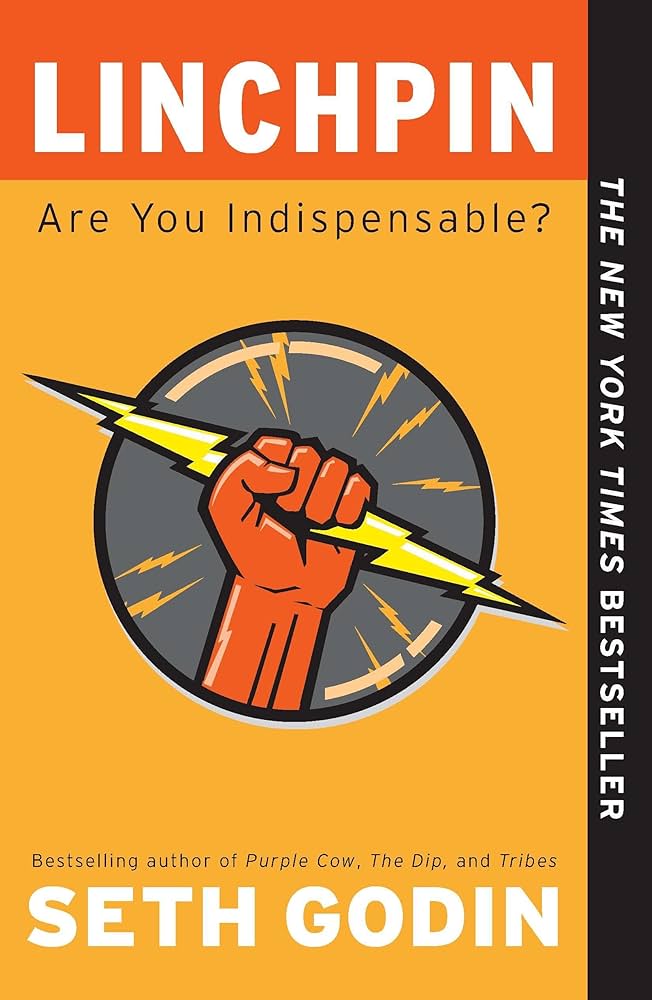
The morning after finishing Linchpin, the book by Seth Godin I review below, I woke up knowing I need to do something really different and personal for this month’s main article: 10 times where I stepped into the potential to do something great—and because we always learn from our failures, another list of 10 “oops” situations, when I failed to step into greatness although the door was open. Hope you enjoy it.I’m not sharing this to brag—but in the hope that it inspires you to come up with your own list of times you did something great. And I’d love it if you share it with me (please 1) reply to this email so I can search by subject line, 2) tell me whether you give me permission to publish (in whole or excerpted) your response, and 3) if the answer to #2 is yes, may I include your name?As I’m using it here, “Linchpin Moments” might be actual moments, but they could also be extended campaigns: hard work that followed the momentary inspiration or grace. To Seth, even being a server at a restaurant can provide opportunities to be a linchpin. With that in mind, I’m listing mine chronologically. In some, I made a huge impact and helped change the world. In others, I simply took leadership over some aspect of my own life.
My Ten Linchpin Moments:
1. Surviving childhood rape by a stranger when I was too young to even know the word, though I felt really dirtied and had a vague sense it wasn’t supposed to happen to boys—and, over the years, drawing on resilience I didn’t know I’d had to process that horrific experience and become a strong feminist (~1968)
2. Hearing a speaker at my first Vietnam protest say that the Vietnam war was undeclared—which I hadn’t known—and understanding in that instant that I was now an activist because the system wasn’t working and the world had to change.I’ve devoted my life to social and environmental good ever since. (1969)
3. Keeping the promise I’d made four years earlier on a fishing trip at age 12—when I chose not to fish and realized that if I didn’t want to kill my own food, I shouldn’t be making someone else do it, and told my mom I was becoming vegetarian. I would have done it immediately, but she told me it would stunt my growth. We didn’t have Ecosia or Google back then to check—and I was a runty kid—so I told her I’d wait until I stopped growing. Keeping a promise at 16 that I’d made at 12 showed me I could keep my word, and that a long-term perspective is important. I’d bet that when she extracted that promise from reluctant me, she thought I’d forget all about it. (1973, and I still don’t eat meat)
4. Going off to college 600 miles away from the stairwell where I was raped and suddenly discovering my bisexuality—something that apparently couldn’t surface when that painful memory was too physically close. And even though at that time, gays, lesbians, and bisexuals were despised (and trans identity was essentially invisible), choosing to get involved with (and eventually run) the campus gay center, organize and participate in a speakers bureau, and be very publicly gay-identified. When I was running it, I focused on outreach and intersectionality. I built a partnership with the Women’s Center next door. I publicized our meetings in the newspaper of the bigger city 20 miles away. And I even had a series of meetings with the liberal but homophobic editor and publisher of the town’s newspaper about why they refused to list our meetings in the community calendar—which gave us lots of exposure because they gave extensive coverage to those meetings. I remember one of them telling me that while he had known other gay men including Bayard Rustin (co-organizer of the 1963 March on Washington), he’d never met someone who considered it normal before. While it’s common knowledge since his biopic, I hadn’t known Rustin was gay, and that was inspiring. (1973-1976)
5. On 3-month college co-ops and a year-long stay at the end of my final co-op, I co-organized the first Gay Pride block party in DC and Gay Centers in Atlanta (which survived at least another decade after I left the city) and Providence (which didn’t make it) (1975-1977)
6. Joining the early organizing of the Clamshell Alliance chapter in Rhode Island, I co-organized several actions including a “swim-in” at the beach where a utility wanted to build a nuclear power plant (and then canceled, probably because we’d begun to generate opposition)—and was one of 1414 arrested in the life-changing and
world-changing Seabrook Occupation and the “university within walls” that we collectively put together during the time we were held in New Hampshire National Guard armories after the mass arrest. We had no idea at the time, but we were birthing a nationwide nonviolent safe energy movement that brought nuclear power plant construction to a near-total halt. (1977)
7. After moving to Northampton, MA, I worked with my City Councilor to pass the first nonsmokers’ rights regulations in town (and I think the third in the state)(~1983)
8. When a developer announced his plan to put 40 trophy homes on a mountain next to our beloved state park just a year after I’d moved to that neighborhood, I was appalled. Then, as I read to the end of the article where several prominent environmentalists expressed variations on “this is terrible, but there’s nothing we can do,” I got angry enough to form an organization, Save the Mountain. As I was mulling over whether I had the spoons to start this movement, a voice literally came into my head with the words, “You were put here to stop this.” After that, I had to take the reins that were handed to me. While the experts were moaning that there was nothing we could do, I got 70 people to show up for the first meeting. I became the publicity co-chair and we got about 70 print articles, a couple of dozen radio interviews, and even a few TV appearances during the 13-month campaign. We routinely brought 400+ to attend meetings and hearings on the project. We flooded the town with lawn signs and bumper stickers. And we attracted the attention of a local philanthropist I’d never heard of, who funded the state to purchase and protect the land. We also passed three new laws that make it very difficult for anyone else to build on the mountain range in town. Most importantly we changed a “you can’t fight City Hall” attitude in town into a perception that we live in a caring and progressive community that can take meaningful action. Many people got involved in town politics, ran for office, volunteered for town committees, and made some real change. (1999-2000)
9. Reflecting on the success of Save the Mountain, I realized that the campaign had not only harnessed everything I knew from 30 years as an activist, but also everything I’d learned in my career as a marketing strategist and copywriter. I started pondering what the activist world could bring to business and settled on the idea that building in strong ethics and environmental/social impact was a business success strategy. I did enough research to anchor my belief with real-
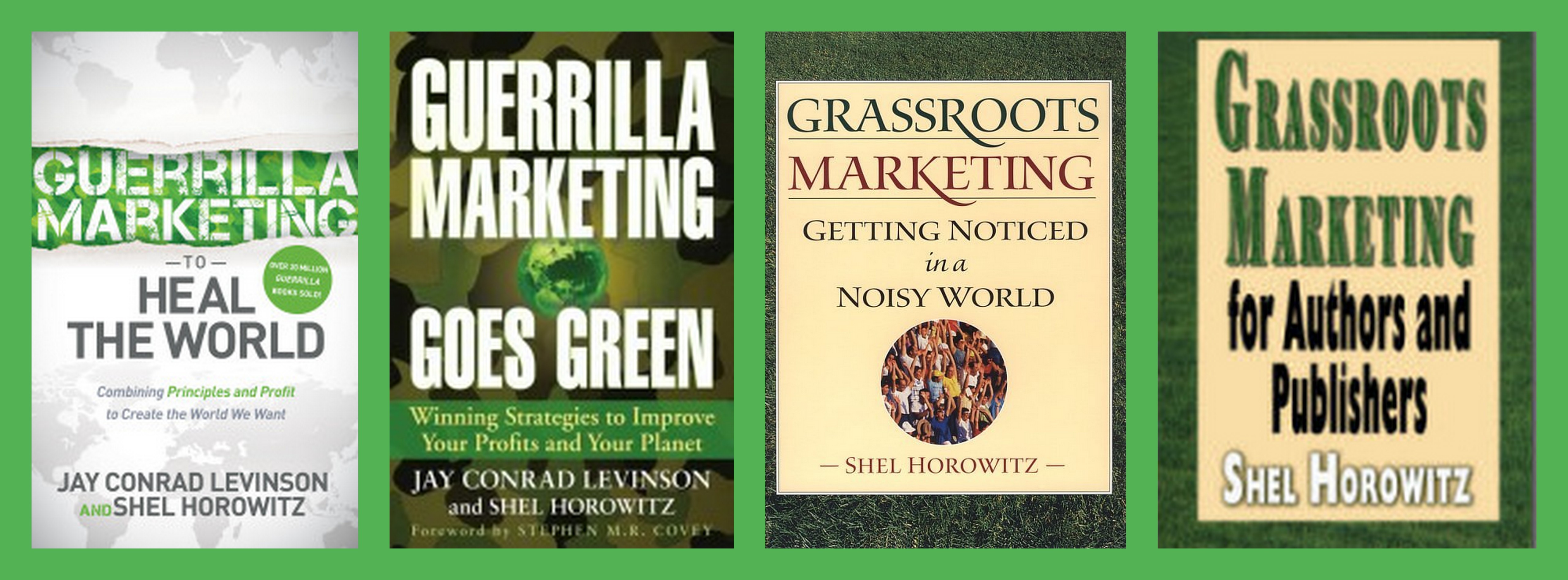
world examples and eventually wrote four books and hundreds of articles, spoke internationally, and skewed my consulting practice and this newsletter toward businesses, authors, and organizations that were creating positive impact. Writing, speaking, and consulting on that intersection of profitability and impact has been the focus of my career for more than 20 years now. (2002-present)
10. Although I’ve been sympathetic to the immigrant cause for decades, my activism had been focused elsewhere. I shifted to immigration justice by accident during the first Trump term, when my wife went to a meeting and came back all excited about going to witness at a Florida detention center holding 3000 migrant teens. I’d said I go with her if we took a vacation in Cuba afterward. I’ve been an active core member of Jewish Activists for Immigration Justice ever since. We did the witness in Florida and a few months later, a full week on the border where we met with refugees from kids to elders, advocates, and government personnel; co-taught a writing workshop for kids and then were asked to do another for their moms; observed the tent courts and the 5a.m. loading of a deportation flight; cooked food on the US side, pulled it across the border in little red wagons, and served a meal for 2500 residents of the refugee camp. Following both delegations, we actively engaged with legislators, the media, public audiences, and college classes—and I think we successfully shifted the narrative in our local area. (2019-present)
11. This one hasn’t happened yet, but I hope it will make a future top ten list: I’m working on a new book about being an activist at age 60+ and have already
begun to speak on being an activist at any age.
And Some of My Many Failures:
1. I’m still troubled by my failure to interrupt a racist comment made by a new neighbor who had invited us in to get to know us after we’d just bought our first house.
2. I’m also still troubled by my well-intended but inappropriately noncommittal teenage response to a stranger who was insulting the woman he was with and asked me for validation. I responded with something way too ambiguous when I should have just told him to stop bullying her.
3. I was never nice enough to my brain-injured older sister or my schizophrenic brother-in-law.
4. As an NYC native, I’ve had to work hard to come across as less abrasive and self-righteous, to speak more slowly and more softly, to leave space (or actively MAKE space) for others to participate in group conversations.
5. I can be impatient with people whose learning or speaking styles are different than mine.
6. There are a lot of moments where I could have been kinder, less judgmental, less moralistic.
7. I’m also still working on being more supportive to people who are in crisis, or even just upset—and to do that in ways that don’t leave me taking on their burdens.
8. I still sometimes feel gleeful when bad things happen to evil people.
9. Sometimes I’m entirely too bossy.
10. I don’t always accept responsibility for problems I’ve caused or worsened.
Looking forward to reading yours! And don’t feel any obligation to come up with your
own “oops” list.