Shel Horowitz’s Clean and Green Newsletter, February 2011
In This Issue…
- Marketing Tip: Lessons from the Ritz-Carlton, San Francisco
- Clean & Green Spotlight: Pepsi: $20 MM to Community, Instead of Super Bowl Ad
- Another Recommended Book: Bye-Bye Boring Bio
- Hear & Meet
- Friends Who Want to Help
A full issue this time, with a tip, a spotlight on a company doing the right thing (a company I don’t often praise, I might add), AND a book review. Enjoy!
PS–Remember that I pay commissions if you find me new corporate/organizational (non-media) markets for my columns, a full-price speaking gig, or a marketing or publishing consulting client. Write for details: mailto:shel@principledprofit.com?subject=NewClientReferralForYou
Lessons from the Ritz-Carlton, San Francisco
Ritz-Carlton has a reputation for blow-your-socks-off customer service, including the widely reported mantra that any employee is empowered to do anything to make a customer happy, as long as implementation will cost less than $200. I’ve even heard a story about a Ritz restaurant employee overhearing a mother telling her non-dairy-eating daughter that there was no soy ice cream on the menu—and going to a nearby store to purchase some.
This was the first time I got to check it out first-hand.
The gleaming white Ritz-Carlton San Francisco sits on a hilltop overlooking the confluence of Chinatown, Nob Hill, and the financial district. Looking like a 1930s-era Washington DC government administrative edifice, with its pillared entrance and huge windows in massive wooden frames, the building exterior is nicely decorated with green bas-relief. It was originally built in 1909 for the Metropolitan Life Insurance Company and was later Cogswell College (this information conveniently printed on the room key packet). Because of the hill, the lobby entrance is actually on the fourth floor, which is confusing if you don’t realize it. Bellmen in top hats handle the pull-through driveway, but I arrived on foot.
Staff was universally courteous and informative, yet not obsequious—and totally willing to engage as one human being to another. Maybe because this was relaxed and mellow San Francisco; I found them a lot less reserved than many other corporate hotel employees of my experience—more like what you’d expect to find at a single-location boutique hotel or bed-and-breakfast. (I was told by another guest that the staff here is in fact a lot friendlier than staff she’s experienced at other Ritz locations.)
The lobby is pleasant but not enchanting, with rather fewer plush chairs than many upscale hotels, and those mostly scattered around the periphery. The front desk was surprisingly small. I think every time I passed by, there were only one (usually) or two clerks on duty, but I never saw a line build up. The interior public spaces are well-decorated: curio cabinets at the ends of hallways featuring tasteful Asian pottery and the like, and the halls lined with paintings and photographs of San Francisco street scenes and landmarks.
My room was refreshingly uncorporate. The furnishings are simple but not sparse; my guess is that they’re relatively new but designed to look old and comfortable. (I did see a reference to a recent $12 million renovation.) The décor is anchored by round mirrors with sun’s-rays frames above each bed (too high to be usable as a mirror, but quite effective in anchoring the eye and setting the tone). The feeling, once again, was not of a corporate chain but a small and homey hotel. And since I personally relate much better to cozy than to cold or edgy, I was pleased. A classical radio station was playing softly as a walked in—nice touch.
In fact, “nice touch” was something I found myself thinking a lot. When I opened my room key packet, I didn’t notice it at first, but there was a business card saying
The Ritz-Carlton
Shel Horowitz
In Residence
with the hotel’s full contact information. Very classy, and something I don’t think I’ve ever experienced at any other hotel. I actually brought it back with me at the end of my trip.
At home, I answer my work phone line (if I don’t recognize the caller ID info) “How may I make your day special?” That business card made me feel special.
Another nice touch was the choice of both dark and milk chocolates on the room tray.
The next morning, my conference started, and here was the nicest touch of all: two concierges assigned to the conference, available for any type of assistance. Roy and Lauren were extremely facilitative. Unasked, Lauren brought my box of books to the exhibit table, and at the end of the conference, Roy took it away to reseal and ship back to me—so their suits got sweaty instead of mine. They rang the chimes at the end of every break to signal time to regather, and were there to handle any logistics issues not just for the organizers but also for all of us attenders. Their presence (for the most part, one of them at a time, but sometimes both were on duty) was beyond the expected staff who brought and removed food and beverages, etc., and made it easy to establish a personal connection between the conference and the hotel. Roy, in particular, also seemed quite interested in the subject of the conference (sustainable foods).
That evening, I called the front desk with a question about the iron, which used icons instead of labels for the controls. I’m a word guy, and I found the interface unintuitive. Rather than trying to explain over the phone, the desk clerk said he’d send someone up from housekeeping to show me—very cool. However, after 20 or 30 minutes when the staffer hadn’t arrived, and as I was fading out for the night, I figured it out on my own and canceled the staffer.
Housekeeping redeemed itself on my final morning, I reported a problem with the toilet and a staffer was at my door in less than three minutes. That’s even better than my experience at a Disney hotel a few years back.
Catering was quite good, with a lot of locally grown fresh vegetables and well-prepared desserts. Another nice touch was having the staff bring the dessert carts from our lunch spot in the courtyard tent (nice and sunny after a morning in the basement conference room) down to the exhibit area so we could continue to feast as the sessions restarted.
One thing that does need to be modernized, however, is the electricity. In this era of multiple devices each with its own charger, there was only one open outlet in my room, and it was nowhere near the desk. In order to type this on my laptop while plugged in, I’m sitting in an armchair and balancing the laptop on a tiny nightstand.
Outlets were also in short supply in our conference room, although there were a decent number along the back wall of the exhibit and food area just outside. Inside, there were none along the side walls, a few (in high demand) at the back and front.
And the elevators had minds of their own. Whether they chose to bring you to your floor without first going in the opposite direction and either opening and closing the doors or just hanging on the wrong floor for a moment with the doors closed seemed quite arbitrary. At least twice a day, I was taken up when I wanted down, or vice versa, without anyone waiting to board at the opposite location.
And another thing that would be easy to rectify is the signage. One elevator bank doesn’t go to the rooms, but to a large and unnavigable staff work area. It took me fifteen minutes to undo the confusion and get back to my room. It would have been easy to put up a small sign saying, “If you wish to go to the guest rooms, please use the elevators on the opposite side of the building.”
These, however, are minor quibbles. In all, I found my first experience of a Ritz-Carlton quite charming, and am better prepared to believe the legends. It certainly rates as my most positive experience in a large corporate hotel chain.
So…what lessons can marketers and customer service people take away from this experience?
Lessons From Things the Ritz Did Right:
- Exceed your customer’s expectations for the experience
- Provide ongoing and consistent human points of contact (Roy and Lauren) who are not only very helpful but also genuinely interested in the customer and the agenda
- Make customers feel special with several “nice touch” flourishes
- Create a superbly pleasant ambience, including high quality fresh, interesting, and well-prepared food along with excellent service
Lessons From Things the Ritz Could Have Done Better
- Never promise more than you deliver; after thrilling me by promising to send someone up to demonstrate the iron, the no-show from housekeeping (with no call explaining the delay) was a definite downer
- Make sure the basics work. Infrastructure issues like bad signage, elevators overriding human instruction, and inadequate electrical outlets need to be addressed, because they can form the core of a customer’s experience, and undermine a lot of the good stuff if the customer chooses to focuses on them (I didn’t—but I certainly noticed).
Shel Horowitz’s latest book is Guerrilla Marketing Goes Green. He also writes the monthly columns, Green And Profitable and Green And Practical.
Pepsi: $20 MM to Community, Instead of Super Bowl Ad
It’s pretty rare that I shine the Clean and Green Spotlight on a huge corporation that’s a household name around the world. It’s a nervous-making proposition, especially since the only time I had to rescind the honor was a company in that category (BP).
However…I have learned that if I bestow the honor for a particular achievement or stance, I’m less likely to smear egg all over my face. And I like to “catch companies doing something right” and highlight them. After all, even Walmart (a company I don’t do business with) was named, because of its amazing reaction to the Katrina flooding of 2005, and may get named again down the road because of its powerful sustainability initiatives at every level and every stakeholder interaction. Yes, I could criticize Walmart for many things—but the company earns my respect in those two areas.
This month, it’s another corporate giant: Pepsi. I am not endorsing Pepsi’s products, many of which are nutritionally dubious or worse. But I do wholeheartedly endorse the company’s decision to stay out of Super Bowl advertising this year, and instead donate the $20 million it would have spent—an obscene amount to spend on an ad—on community fundraisng projects.
Here are a few lines from the New York Times story about the campaign:
More than $20 million in grants, ranging from $5,000 to $250,000, has been distributed to about 400 winners so far, including $25,000 for new uniforms for the Cedar Park High School band in Cedar Park, Tex., which took its campaign to win votes to Friday night football games. In Las Vegas, a new playground opened last week with a $25,000 grant won in September.
The idea is nicely interactive, involving a lot of voting mechanisms, including heavy use of social media—and spreading the wealth around many projects that could benefit from mid-range grants. It’s a cool bit of community building that also does an excellent job of brand building. And I love win-wins like that.
(My thanks to Chris MacDonald, @ethicsblogger on Twitter, for steering me to this story.)
Another Recommended Book: Bye-Bye Boring Bio by Nancy Juetten
What’s the kiss of death at a party? It’s answering the “what do you do” question the wrong way–some deadly response like “I sell life insurance.” While people will be stampeding away for anyone who answers like that, they’ll flock to someone who does the same thing, but knows how to express it creatively. To keep the same example, wouldn’t you be willing to spend a few minutes finding out about the person who responds, “I help your hard-earned money pass to your children without stopping to drop half of it at the tax offices.”
Many websites and marketing materials make the same kind of mistake. You’ve seen “about us” pages that just blah blah blah about the boring facts, or drown their unique focus in “corporatese.”
If your marketing materials suffer for that disease, Nancy Juetten has the cure. I’ve been an admirer of hers for quite some time, and have incorporated some of her thinking into the work I do with my own marketing clients.
Nancy’s the author of a wonderful book, Bye-Bye Boring Bio, that shows you how to turn on the excitement in everything from Twitter profiles to books, and then convert that excitement into monetization. Highly recommended for speakers, authors, entrepreneurs, and nonprofits–anyone, in short, who wants to convince anyone else that their product, service, or idea is exactly what the prospect needs. Your choice of e-book or spiral-bound.
https://www.byebyeboringbio.com
Hear & Meet Shel
February
- I’ve really enjoyed Ryan Eliason’s Social Entrepreneurship teleseminar series. In fact, I’ve really made a point of listening to the replays on the calls I couldn’t attend live, and have listened to far more than I do of most series. Speakers include tree activist Julia Butterfly Hill, former Obama green jobs czar Van Jones, brain researcher/philosopher Dr. Bruce Lipton, the writer Marianne Williamson, Green America head Alisa Gravitz, Bioneers co-founder Nina Simons, and my eco-biz friends George Kao and Tad Hargrave. My session with Ryan airs tomorrow, February 16, 2011, 1 pm ET/10 am PST.
–>If you want to gain access to the replays, visit https://shelhorowitz.com/go/RyanEliason to register for the no-cost live calls. Once you’ve signed up, you’ll get the information about how to buy the entire set of this excellent series.
- Yes, it’s short notice. I did mention it last month, though–I’ll be a panelist (not the same thing as a speaker, in this case) at Ken McArthur’s next JV Alert, Orlando, February 18-20. I’ve heard amazing things about these conferences, including some legendary and very profitable deals and partnerships. I’m eager to experience it. If you’d like to go too, click here for the very impressive speaker lineup and registration link https://shelhorowitz.com/go/JVAlert
- Social Media for Terrified Authors: How to Turn Scary Into Success: Wednesday, March 30, 2 pm ET/11 a.m. PT, with Shel Horowitz and book coach/social media maven Judy Cullins.
* Have an impact on the three major social media networks in just minutes a day: control social media and keep it from controlling you
* Understand how to spread your content around the Internet with just a couple of clicks: more ROI for less work
* Turn social media connections into website traffic, book sales, and client gigs without spending any money to do it.
*Increase your credibility as a savvy expert.
*Define and find your book’s target audience on the big 3 social media marketing sites–and market directly to the exact people who can benefit from your book.
* Get your website or blog pages highly ranked on Google and other search engines.
Just $19.95, and includes several valuable bonuses. Click https://www.bookcoaching.com/shel-judy-teleseminar.php to get all the details (this is not an affiliate link, but I do benefit financially from your registration).
April
- April 8-10 I plan to attend the National Conference on Media Reform, in Boston. I’ve attended two previous conferences and am always blown away. If you’re interested in the impact of corporate media on our culture, progressive politics, or exploring the diversified world of D-I-Y (do-it-yourself) independent media—everything from setting up a blog to running your own TV station), this is a must. And if you happen to be in the Amherst/Northampton, MA area, let’s talk about carpooling. I’m thrilled to attend one that won’t require getting on a plane!
- Saturday, April 23rd, 2011 10 AM-4 PM, my wife D. Dina Friedman and I will exhibit again at Amherst Sustainability Festival in downtown Amherst, MA
- Thursday, April 28, 1 pm ET/10 a.m. PT: Becky Cortino interviews me on Green Marketing for Biz Buzz: https://www.blogtalkradio.com/bizbuzz Becky is a master networker who has reached out consistently over time, and I’ll bet she does a terrific interview.
May
- Once again, I’ll be attending Book Expo America, May 24-26 in New York City, and probably IBPA University May 22- 23
Friends Who Want to Help
- Next to marriage, a business partnership is the most intense and collaborative-dependent and interdependent relationship you can have. And like marriage over 50% of them fail. That’s a staggering statistic by any measurement. Finding the Fork in the Road is all about business partnerships. To buy the book, to see all the people Linda is partnering with to give you *more than 80 goodies* goodies during the launch, or to learn more, go to: https://www.findingtheforkintheroad.com/book (scroll down to see the gifts).
- Dr. Mani presents ‘A DAY FOR HEARTS: CHD Awareness Day’ on February 14th – a re-launch of his ebook, “47 Hearts” at https://EzineMarketingCenter.com/47hearts You can read the book in Kindle or PDF format for just $2.99, but he’s hoping you then choose to buy a few copies as a donation to his beloved children’s heart surgery program in India. I bet he’ll still let you in the door even though it was yesterday.
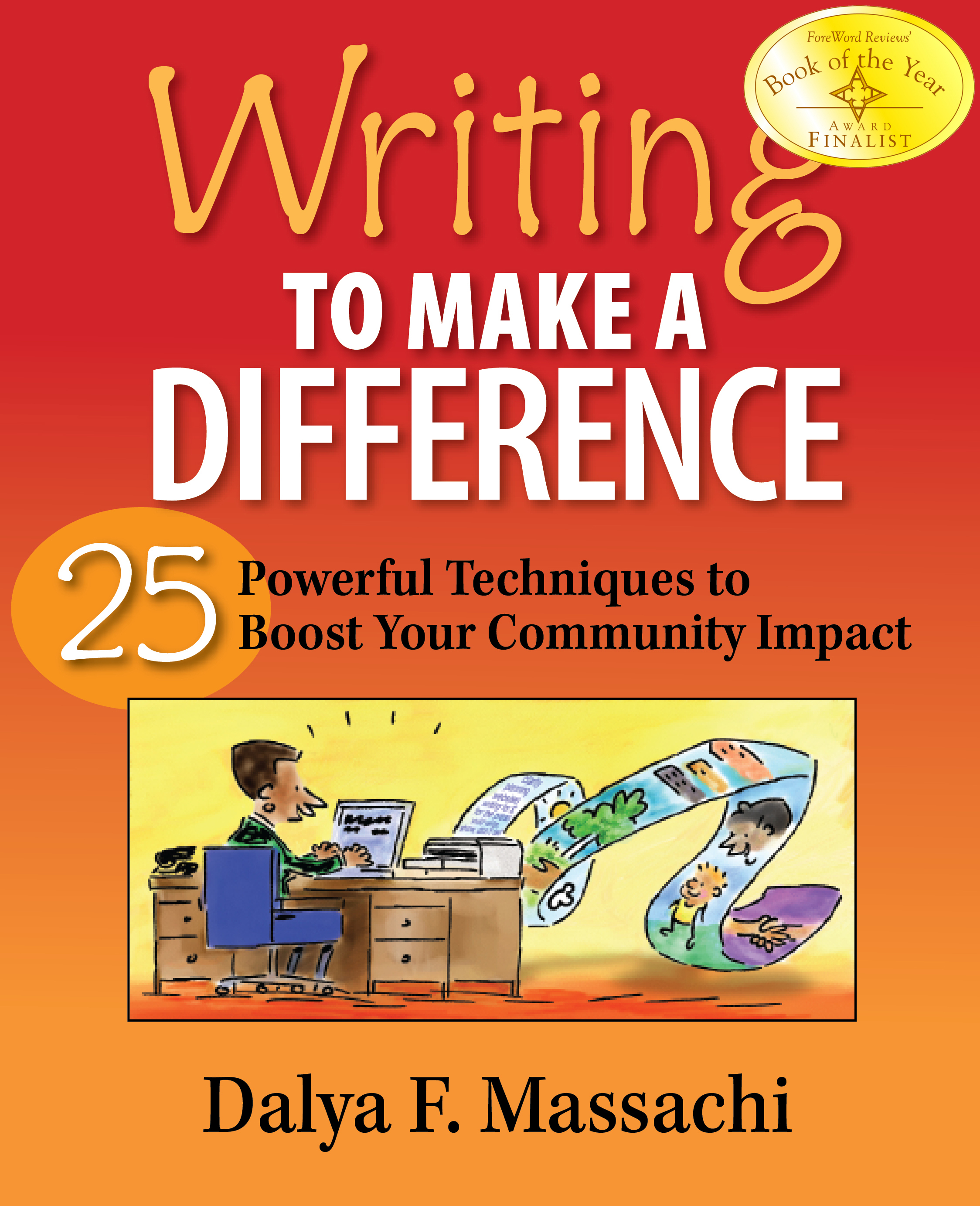 While her focus is tilted toward grassroots and nonprofit/not-for-profit community organizations, about 98 percent of her advice is equally applicable to business—especially green, socially conscious, ethical businesses that need to communicate a bigger message than “buy my stuff.”