The Clean & Green Club, July 2012
 |
|
 |
|||||||||||||||||||||||||||||||||||||||||||||||||||||||||||||||||||||||||||||||||||||||||||
|
|||||||||||||||||||||||||||||||||||||||||||||||||||||||||||||||||||||||||||||||||||||||||||||







 So what does this kind of guerrilla marketing have to do with libraries? Librarians are thought of as a quiet bunch who rarely make any kind of public stink (though this is actually not true—just ask progressive
 go to new markets and audiences on the arm of someone they already know and trust I used JVs to reach 5 million people for the launch of my most recent book Guerrilla Marketing Goes Green-versus the roughly 25,000 I can reach on my own.
 Marketing Without Advertising: Eight Ways to Build a Business Your Customers Will Love & Recommend, by Michael Phillips and Salli Raspberry (Nolo Press, 2008)
|
|
|
|||||||||||||||||||||||||||||||||||||||||||||||||||||||||||||||||||||||||||||||||||||||||||
|
|||||||||||||||||||||||||||||||||||||||||||||||||||||||||||||||||||||||||||||||||||||||||||||
|
|
|
||||||||||||||||||||||||||||||||||||||||||||||||||||||||||||||||||||||||||||||||||||||||
|
||||||||||||||||||||||||||||||||||||||||||||||||||||||||||||||||||||||||||||||||||||||||||
|
|
|
||||||||||||||||||||||||||||||||||||||||||||||||||||||||||||||||||||||||||||||||||||||||||||||||||||||||
|
||||||||||||||||||||||||||||||||||||||||||||||||||||||||||||||||||||||||||||||||||||||||||||||||||||||||||
|
|
|
||||||||||||||||||||||||||||||||||||||||||||||||||||||||||||||||||||||||||||||||||||||||||||||||||||||||
|
||||||||||||||||||||||||||||||||||||||||||||||||||||||||||||||||||||||||||||||||||||||||||||||||||||||||||
|
|
|
||||||||||||||||||||||||||||||||||||||||||||||||||||||||||||||||||||||||||||||||||||||||||||||||||||||||
|
||||||||||||||||||||||||||||||||||||||||||||||||||||||||||||||||||||||||||||||||||||||||||||||||||||||||||
If you want to communicate clearly, you have to write clearly. If you want to write clearly, you want this book.
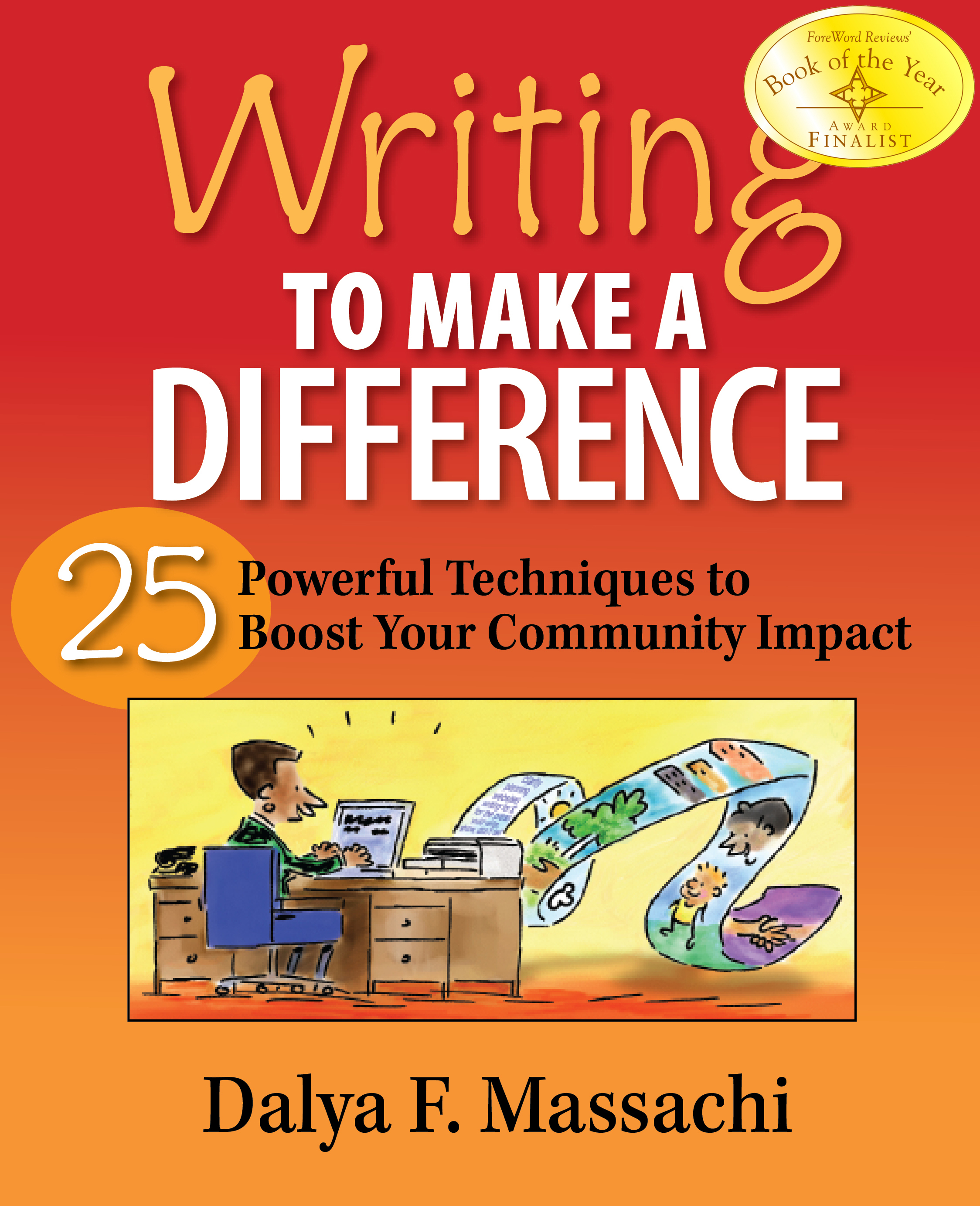 While her focus is tilted toward grassroots and nonprofit/not-for-profit community organizations, about 98 percent of her advice is equally applicable to business—especially green, socially conscious, ethical businesses that need to communicate a bigger message than “buy my stuff.”
Massachi has a light touch that turns a could-have-been-deadly subject into an enjoyable read, and the textbook-like format is full of exercises, nice little interjections, personal experience, and such. Which makes it a lot more palatable than the grammar and style textbooks of my youth. I’d even go so far as to say that this is a book that I’d have liked to have written, and certainly one I wish I’d had when I was starting my career as a social-change and environmental action writer.
Still, I wanted to take it a little at a time, so I could absorb it properly. Now that I’ve gotten all the way through, I’m sure I’ll be referring to it when I hit a grammar snag.
Not to say the book is perfect. Some of the later chapters get a bit bogged down in grammatical minutiae, and there are a few places where I would argue with her style choices. Example: call me old-fashioned, but to me, the only time you’d use an apostrophe after a set of initials is as a possessive: “NGO’s” can *only* mean “belonging to an NGO” [Non-Governmental Organization]. But to Dalya, a generation younger than me, using that construction as a plural noun is a valid if unfortunate choice.
Be sure to read the appendices; otherwise, you’ll miss the excellent brief sections on writing for audio and video, as well as a wonderful list of “visionary” trigger words (right after a list of marketing trigger words)—these are the words that tug at our readers’ heartstrings and help us frame the narrative. And that’s something that far too often, progressives have been clumsy with.
A must for the shelf of any serious business or nonprofit writer, and even more so for employees or managers who are not writers but get thrown a writing project (if they don’t want to contact someone like Dalya or me to do it for them). Nicely indexed and crammed with resources, too. https://dfmassachi.net/
|
|
|
||||||||||||||||||||||||||||||||||||||||||||||||||||||||||||||||||||||||||||||||||||||||||
|
||||||||||||||||||||||||||||||||||||||||||||||||||||||||||||||||||||||||||||||||||||||||||||
In This Issue…
Last month, we looked at the culture of video making, its enormous popularity, and how easy it is to be part of it. This month, we’ll get specific with some quick pointers to keep in mind when making videos, as well as a list of content ideas (only scraping the edge of what’s possible).
Here are the production tips:
Now, a few of the many thematic possibilities; let your imagination run wild to generate more:
Gift for You: Publicity Planner
If you work in publicity or marketing, Paul Krupin’s annual Publicity Planner is a must-have—and it’s a gift to you with no strings attached, no registration required. It’s a monthly calendar with events you can peg news stories around, very nicely laid out, too. Get yours at https://www.directcontactpr.com/files/files/PublicityCalendar2012.pdf
Gift for You: Ethical Business Manifesto
The Internet marketing world (and the business world in general) contains far too many people who seem to have forgotten basic ethics somewhere a long the way. I get so tired of people hearing abut my books on business ethics as a success strategy and telling me, “Business ethics? That’s an oxymoron.”
No, it’s not. It’s actually a key to long-term surviving and thriving. And that’s one of the reasons I’ve always been willing to partner with Marcia Yudkin, one of the most ethical people I know, and a very successful marketer. Marcia has a new gift for you: Get yours, again, with no strings attached and no registration required, at “The No-Harm Marketing Manifesto.” https://shelhorowitz.com/go/noharmmarketing/
Book Award to Enter
One of the best ways to market a book is to be able to list yourself as an award-winning author. Dan Poynter, author of The Self-Publishing Manual and numerous other books for authors and publishers, has put together a new Global E-Book Award program. Knowing Dan, it’s likely to be known as a prestigious honor in the fairly near future. Enter by March 12 at https://globalebookawards.com
Books with Bonus Packages
Shocking betrayals at home and work. Confrontations with cancer, and corrupt businessmen. Building a business worth millions. Paul Streitz has experienced it all, triumphed, and documented everything in his new book, Blue Collar Buddha, with powerful life lessons for the reader. Check out this new book along with the big bonus package (a lot of stuff about healthy relationships and healthy families, as well as my own Painless Green e-book) at https://bit.ly/bcb1412
Are you ready to make 2012 your best year ever? Take charge of your business and your life with this easily digested book—a distillation of business wisdom from Napoleon Hill through Dan Kennedy as expressed in one entrepreneur’s life. Maybe you’ve thought about leaving the rat race and being an entrepreneur. Maybe you’ve already made the jump. Discover the power of 1 focused hour a day with Henry Evans, The Hour A Day Entrepreneur. I am very proud and excited to be a part of the launch of this new book because it is only with YOU – the entrepreneur or aspiring entrepreneur – that we will overcome these current economic times. Join in and make 2012 YOUR best year ever! https://bit.ly/1hrbook Bonuses include a bunch of video training, among other things, and the book itself contains links to numerous resources.
Want to shift to a new career? A new relationship? A new path in your life? Want to simply find peace of mind? Make Your SHIFT: The Five Most Powerful Moves You Can Make to Get Where YOU Want to Go is the newest book by Beverly Flaxington, who has spent over two decades working with individuals and groups as a hypnotherapist, career coach, corporate consultant, behavioral expert, and change management leader. Now for the first time, she has focused her phenomenal depth of experience and knowledge to create a groundbreaking book to help you make the SHIFT. Bev’s trademarked SHIFT Model is taught in colleges and used by corporations. Now this book gives you the tools you need to make your shift. Visit https://shiftmodel.com/ for more information and over $1,500.00 in FREE bonus offers! Includes a free offer from the author.
International journalist Judah Freed has launched his new book, GLOBAL SENSE: The 2012 Edition: A spiritual handbook on the nature of society and how to change the world by changing ourselves. Global Sense encourages an evolutionary shift of consciousness into seeing our global interdependence. This awareness of our connectivity empowers us to change the world by changing ourselves. Filled with concrete strategies and tools, this amazingly practical book brings our highest ideals down to earth where we can use them.
Disclosures: 1. I haven’t read this version, but I read and favorably reviewed the original edition several years ago. 2. Also, he cites my book Grassroots Marketing on page 228.
Judah’s not doing a bonus promotion, but if you visit his site, https://globalsense.com, he’ll give you the introduction and first two chapters. He’s a brilliant thinker and I think you’ll like this one.
Buy at Amazon: https://www.amazon.com/dp/0972890580
Learn more: https://globalsense.com
Predictable Revenue: Turn Your Business Into A Sales Machine With The $100 Million Best Practices of Salesforce.com, by Aaron Ross and Marylou Tyler (Pebblestorm Press, 2011)
In today’s world, old-fashioned pushy selling doesn’t work any more (there’s some doubt in my mind about whether it ever did). Smart businesspeople realize there has to be a new model for selling, expressed in “heresies” like these:
How?
For starters, salespeople should spend their time selling; let other team members do the prospecting/lead generation and qualification, and post-sale service. For another, the whole process is one of active engagement, solving problems and advancing goals for the customer, and in the process, doing well for the sales team.
Then bring in systemization. If you only pay for leads and contacts that have been properly entered into your sales automation system, if senior execs from the CEO down adopt and publicly use the system, and if you build training and work-role customization into the migration, everyone will be using the sales automation system. This in turn helps you understand when you have a real prospect, and when you just have a tire-kicker…what leads need what kind of follow-up, and at what points in the process…and what to do with the data you’ve extracted as you manage your team.
In addition to giving you the “cold calling 2.0” process (which is actually a way of making sure that your leads are nice and warmed up before a sales person ever gets involved), Predictable Revenue is also full of great checklists and info graphics. Examples include the top 6 prospecting mistakes, questions to ask a prospect before scheduling a demo, 5 types of prospects (and three techniques), and 9 principles to “build a sales machine.”
Predictable Revenue has a ton of wisdom–such as some really great questions to ask a prospect (example: “if you were me, how would you approach this organization?”), and a whole lot on when to step back and let the prospect lead him/herself to the sale, instead of trying to force it. Individual sales and marketing people could learn a lot here, and there’s also a big section on how to manage a sales and prospecting force.
Interestingly, in that section, Ross and Tyler recommend a mix of salary and commission rather than a 100% commission model, and they also recommend that employees (as a group) be involved in designing their own compensation package, with full transparency so everyone knows what all the other members of the lead gen and sales team is making, and why. Add in some powerful cross-fertilization techniques to build skills of your internal teams and even your channel partners, and things are going to start bubbling.
Note: you can get an excerpt at no charge by visiting https://predictablerevenue.com/
In This Issue…
A few weeks ago, I received a gift of a very spiffy Dell 3335dn multifunction printer, which not only prints two-sided at high resolution from any computer on our network, but also scans, copies, e-mails, and stores documents in its memory. I have to tell you, even though I’ve gotten along just fine without in-house copying and faxing capabilities, I’m finding that I really enjoy having them.
Because the company is courting the green market for this printer (which not only can print both sides of the paper but also has some cool energy management features), Dell’s promotion team came to me and asked if I’d like to give one of these printers away. Of course, I agreed. But I put a condition on it. Rather than just give one away randomly, I’ll give it to the person who submits the best sustainability tip via my Twitter account during the giveaway days.
So you’ll be rewarded for your thinking processes, and probably not facing an enormous number of entries. In other words, if you give this your best shot, you’ll have a much better chance of winning than in most contests.
And five runners-up get a copy of my very useful e-book, Painless Green: 111 Tips to Help the Environment, Lower Your Carbon Footprint, Cut Your Budget, and Improve Your Quality of Life-With No Negative Impact on Your Lifestyle.
Disclosure: as is obvious from above, I got one of these printers as a gift and have been using it steadily ever since.
By entering, you agree to both my rules and Dell’s rules for the contest. You’ll find both sets of rules posted at https://painlessgreenbook.com/win-a-1299-printer-december-16-19-2011
In this two-part series, I’ll first introduce the context of video marketing in today’s world–which is quite different from even a few years ago. Next month, I’ll follow up with specific things to keep in mind when shooting a video, and some ideas for what kind of content to create.
There are probably at least 1001 ways to promote a product or a service with video–a medium that penetrates the brain like no other (as we’ve known since the popularization of television began more than 60 years ago). Video used to require considerable technical skill and a whole pile of expensive equipment. But these days, anyone can shoot and produce a video. All you need is a pocket video camera or (for interviews) even just a Skype account with the call recorder add-on; distribution is as simple as uploading to a video sharing site like Youtube, Vimeo, Viddler, Ustream, or their many competitors.
(Note: For some purposes, I still advise professional production; the quality will be way better. Your speaker demo reel, for instance, should absolutely be done by a pro, and so should anything that you expect to go head-to-head with footage shot by big studios. But you can do a lot with homegrown videos.)
Video is enormously popular. This list of more than 300 video sharing sites <https://www.reelseo.com/list-video-sharing-websites/> includes Alexa rank (how much they get visited) and Google Page Rank (a vague indication of how much search engines like them). Astoundingly, 46 sites have an Alexa rank better than 1000. That means out of the roughly 300 million websites in the entire world, 46 of the 1000 most-visited websites exist to share video. And many of these sites allow user submissions of videos.
Alexa’s own Top Sites page gives Youtube the number 3 position in both the world and the United States, trailing only Google (which owns Youtube) and Facebook (data checked 12/12/11).
On Youtube, and presumably other sites, you can set up a branded URL for your own channel, building name recognition. You can also easily embed a video hosted on any of these sites into your own web pages and even e-mails.
And don’t forget that these sites are typically non-exclusive. You can post the same video on multiple sites, which may be especially useful if there’s a niche video site covering your area of expertise.
Guerrilla Marketing Intensive–$1000 discount just for you
My co-author, Jay Conrad Levinson, “the Father of Guerilla Marketing,” has a few seats left in his next Guerrilla Marketing Intensive, at his Florida home, January 23rd-25th. 21 hours of training over three days. Normally $4997 (payable in up to four installments)–but Jay’s manager (his daughter Amy) has offered a $1000 discount to my subscribers. Limited to just ten people, so this is pretty in-depth. https://gmarketing.
To get this special rate, just click this link: mailto:olympiagal@aol.com?subject=Discount?cc=shel@frugalfun.com to tell Amy you want the $1000 off for Shel’s subscribers (Also tell her whether you prefer an online payment link or prefer to call in your payment info).
Remember the hit song, “Don’t Worry…Be happy?” But how do you GET happy without worrying? Ana Weber’s book/course, “The Happiness Thermometer,” can give you more than a few clues to increase your happiness quotient without having to worry about it. https://3bl.me/rb3y6n
Coop-themed Poetry Contest for Middle Schoolers
Know a middle-schooler who likes to write? Cheese and milk co-op Cabot is doing a poetry contest for students in grades 5-8, on the cooperative spirit. Winner not only gets a cash prize, but his or her poem on a Cabot butter box. For details: https://potatohill.com/files/20
About 80 percent of Mari Smith’s new book is about social media–but I’d say the other 20 percent might be worth the closest look.
That’s because Smith is not only a believer in meeting face-to-face, but a brilliant tactician who uses her prodigious online skills to totally win over the people she meets offline (at conferences, for example)–and tells you exactly how to do the same.
Using a powerful yet very accessible set of online research tools to steer her face-to-face encounters, Smith creates quite a bit of “wow factor” by integrating online comments about her presentation directly into the speech, in real time–and to not just show up very prepared to network with other speakers and attenders, but to have impressed them so much ahead of (as well as during) the event that they actually seek you out.
Smith outlines how she does this, step by step, in Chapter 7 of her new book, The New Relationship Marketing: How to Build a Large, Loyal, Profitable Network Using the Social Web (John Wiley and Sons, 2011). She titles the chapter, Go Offline to Optimize Your Online Marketing–but I’d actually flip that around. Really, it’s about going *online* to maximize your *offline* marketing.
While that chapter alone would be worth buying the book, it’s typical of the other good stuff, all based on the idea of using “radical strategic visibility” to build real relationships in business. She encourages businesses to think beyond B2B (business-to-business) and B2C (business-to-consumer) to “P2P”–people-to-people. For instance, she talks about how to get your A-list–the people you want to impress–to see you as a valued colleague…what parts of your social media presence you should and should not delegate, and why…how to recovery gracefully and with minimal damage from a social-media faux pas…how businesses with purely local clientele (such as restaurants) can market effectively on social media…identifying and cultivating “superfans” who will advance your brand perhaps better than you can do on your own.
And it all comes from an attitude of service, perhaps best summed up by this quote from pages 193-194: “Always be thinking about how you can tap into the intelligent network of people that will allow you to bring greater value to each and every individual and your community at large. Provide a better product and better service, and consistently build your social equity to establish your brand as the natural “go-to” for your field. You can become a top industry leader by utilizing the inclusion of your marketplace. If you’re really treating people as equals–whether it’s 10 or 10 million–then you are relating to each one with the greatest of respect by including and involving them.”
The book is also crammed with resources, both in the main text and in the appendix, and features a wonderfully comprehensive index (something I desperately wish more business books paid attention to).
As a marketing consultant and copywriter … award-winning author of eight books… international speaker, blogger, syndicated columnist — Shel Horowitz shows how green and ethical businesses can actually be *more* profitable than your less-green competitors. His most recent book is category bestseller Guerrilla Marketing Goes Green: Winning Strategies to Improve Your Profits and Your Planet. Shel also helps authors/publishers, small businesses, and organizations to market effectively, and turns unpublished writers into well-published authors. He was inducted into the National Environmental Hall of Fame in 2011.
Shel began publishing his monthly newsletter all the way back in 1997, making it one of the oldest marketing e-zines (it’s changed names a few times along the way). Shel brings you a mix of actionable marketing tips, profiles of successful green and ethical businesses, and reviews of worthwhile books.
In This Issue…
Guest article by Olivia Khalili of Cause Capitalism, where this originally appeared.
The concept is simple and brilliant. When I came across Living Goods, my stomach flipped with the potential impact of the organization’s work. The mechanisms, intent and appeal match that of blockbuster social enterprises Kiva and charity: water.
Living Goods replicates Avon’s model of door-to-door selling, but instead of peddling lipstick and mascara to middle-class women, Living Goods’ Health Promoters sell affordable health products—from antibacterial soap to de-worming tablets to condoms to bednets—to the Ugandan poor. By providing a way for women to make a living by selling products that prevent unnecessary death from treatable diseases, Living Goods is fighting the double-headed dragon of mortality and poverty.
More than 10 million children die every year (pause for a second; that’s 27,398 deaths a day) from easily treatable conditions like malaria, TB and diarrhoeal disease. Products for prevention and treatment exist, but efficient and scalable delivery systems are lacking. Living Goods uses micro-enterprise and micro-franchising to get these products into communities and to keep them there. Health Promoters buy a business-in-a-box for $100-$250, which includes the products, as well as training, marketing and coaching. Living Goods and its partners—one of whom is the microfinance and development organization BRAC—provide affordable financing for the kits.
Malaria, as one example, deals a double blow by causing economic as well as physical suffering. Reoccurring and prolonged bouts with malaria prevent people from working. Living Goods is committed to inverting this cycle by incentivizing its Health Promoters (through profit) to make essential health products available to more people. The more a Health Promoter does this, the larger her profit and the greater the health impact she will have on her community.
Over the next five years, Living Goods aims to become financially self-sustaining and to replicate its model in other countries. Charles Slaughter, Living Goods’ founder and president, is very open to helping other social enterprises adopt or replicate the model. Partnering with the Poverty Action Lab* (PAL), Living Goods is tracking its impact through randomized control studies as it works to lower mortality rates for children under five by 15-30% in its target communities.
Child and community health, female economic development, financial sustainability, open-source replication, local support, microfinance micro-enterprise—these outcomes and mechanisms give me an adrenaline jolt. Why have I not heard of Living Goods earlier? If you’re as moved by Living Goods’ approach and mission as I am, you can sign up for its e-newsletter or make a donation. Living Goods doesn’t yet have a Twitter or Facebook presence (but I’m about to offer to help develop it for them).
*The New Yorker recently wrote a great profile on PAL and the organization’s co-founder Esther Duflo.
Amazing $2500 Freebie from Sean D’Souza of Psychotactics
Of the many marketers I regularly follow and learn from, I consider Sean D’Souza one of the smartest (as well among the most entertaining). If you’ve been reading my newsletter for a while, you might remember I’ve referred to him often, and have posted several of his articles to my various websites.
Well, now Sean is giving away a 36-audio course he normally charges $2500 for—if you register for his excellent newsletter—I’ve been reading it for many years—by November 29. Not only will you get what promises to be a ton of useful information, you’ll get to listen to Sean’s quirky and enjoyable Kiwi accent (he’s a New Zealander) as he delivers it. I’ve listened to a lot of his audios over the years, and I always learn a lot about human psychology—and how we marketers can most effectively harness it.
This workshop, the Brain Alchemy Masterclass, explains why structure—not marketing—is critical to growing a business effectively.
Because he’s including so much material, Sean is rationing out the access codes over time, so he doesn’t wipe out his servers with too many people trying to download at once. (I signed up and I’m waiting eagerly for my code.) Here’s the link: https://www.psychotactics.com/
The Best-Conceived JV I’ve Seen
Do you do Joint Ventures? As I hinted last month, I’m helping to orchestrate a particularly exciting one, involving celebrities, politicians, environmental education, kids, quilts and all sorts of other cool stuff that appeals to the media and will get you coverage and contacts. We’re planning ahead on this-want to get commitments this year for ramping up early next year and a launch that ties in with Earth Day next spring-but don’t wait to get involved. If you’d like to receive an invitation as soon as we’re ready, please use this link to tell me (and let me know if you think of yourself as more of a marketer, or more of an environmentalist).
Unfamiliar with Joint Ventures? Basically, we partner with you, you tell your own contacts (like the readers of your e-zine or blog), and if people make purchases from your link, you earn a commission.
Guerrilla Marketing Intensive – $1000 discount just for you
My co-author, Jay Conrad Levinson, “the Father of Guerilla Marketing,” has a few seats left in his next Guerrilla Marketing Intensive, at his Florida home, January 23rd-25th. 21 hours of training over three days. Normally $4997 (payable in up to four installments)—but Jay’s manager (his daughter Amy) has offered a $1000 discount to my subscribers. Limited to just ten people, so this is pretty in-depth. https://gmarketing.
To get this special rate, just click this link: mailto:olympiagal@aol.com?subject=Discount?cc=shel@frugalfun.com to tell Amy you want the $1000 off for Shel’s subscribers (Also tell her whether you prefer an online payment link or prefer to call in your payment info).
Coop-themed Poetry Contest for Middle Schoolers
Know a middle-schooler who likes to write? Cheese and milk co-op Cabot is doing a poetry contest for students in grades 5-8, on the cooperative spirit. Winner not only gets a cash prize, but his or her poem on a Cabot butter box. For details: https://potatohill.com/files/20
November
December:
January
Also remember—if you set me up an engagement, you could earn a generous commission.
Another Recommended Book: Guerrilla Marketing Remix, by Jay Conrad Levinson and Jeannie Levinson (Entrepreneur Press)
I have read many of the Guerrilla Marketing books, and written one of them (Guerrilla Marketing Goes Green)—and I have to tell you this new “best of collection” is extremely impressive. It’s really two books in one, each of which is well worth reading (and taking notes on).
Through page 158, Jay and Jeannie’s summarize their key lessons after many years in the forefront of marketing innovation. And then in part two, they’ve culled some of the best wisdom from the numerous Guerrilla books co-authored with other experts.
The Levinsons have never been afraid to be heretics, and by page 15, they’re already very much against the grain. That’s where they tell us to beware of humor in advertising—because a key Guerrilla Marketing principle (as well as a core principle of traditional advertising) is repetition, but repeated humor gets old very quickly. By the third or fourth time, it starts to be annoying.
Other insights from part 1:
This whole section is rich in practical, actionable advice—much of it broken down into easy checklists, like the 200 top marketing weapons (really closer to 150, as several are restatements and variations), 5 overarching strategies, 50 reasons to advertise, and 35 advertising mistakes.
In fact, the advertising chapter is so jammed with wisdom that I would recommend to any of my marketing clients considering buying advertising that they read it, read it again three days later, and then again after a week. It’s that good.
And then there are the riches of part 2. With collaborators like Seth Godin, David Garfinkel, Laurel Langemeier, and Alex Mandossian, it’s not surprising to find many gems But don’t forget to read the folks who are not household names. Some of the best advice came from people you may never heard of, like Frank Adkins and Chris Forbes, who did Guerrilla Marketing for Nonprofits, or Orvel Ray Wilson and Mark S.A. Smith’s incredible tips from Guerrilla Negotiating. Many of these contributions are very strong as well.
Full disclosure: I am a contributor to this book, and I fully hope that the excerpt from Guerrilla Marketing Goes Green will encourage new readers t buy my book—just as I will be looking to acquire several of the other books this marvelous volume exposed me to.
Highly recommended.
 Irish crafter at work
 Asian noodle bar, Drogheda
 The Underdog Edge: How Ordinary People Change the Minds of the Powerful…and Live to Tell About It, by Amy Showalter


 Watch for a guest blog, How to Write and Promote Your Book…at the Same Time, on June 12 from Nina Amir, author of How to Blog a Book (Writers Digest Books)


 Become an Award Winning Company: 7 Steps to Unlock The Million Dollar Secret Every Entrepreneur Needs to Know, by Matt Shoup (Shoup Consulting, 2012)


 One of the rules in pitching journalists through services that send queries from journalists seeking stories–such as HARO (
 Great New Telesummit from Ryan Elliason
 Ebook Award to Enter
 Is there a more authentic marketing strategy than turning your fans into brand ambassadors? I’ve long been an advocate of this approach, but even so, Brains On Fire opened my eyes to possibilities I’d never thought about.
 Read this book as an excellent companion to Guerrilla Marketing Goes Green. And be sure to read the introduction, which has enormous value.