The Clean and Green Club, October 2025

<!doctype html>


Having trouble reading this as an email? Please visit thecleanandgreenclub.com to read it comfortably online.

Shel Horowitz’s Clean and Green Marketing Tip: October 2025

Never Forget that People Working Together Change the World: YOU Have Power Even When You Think You Don’t
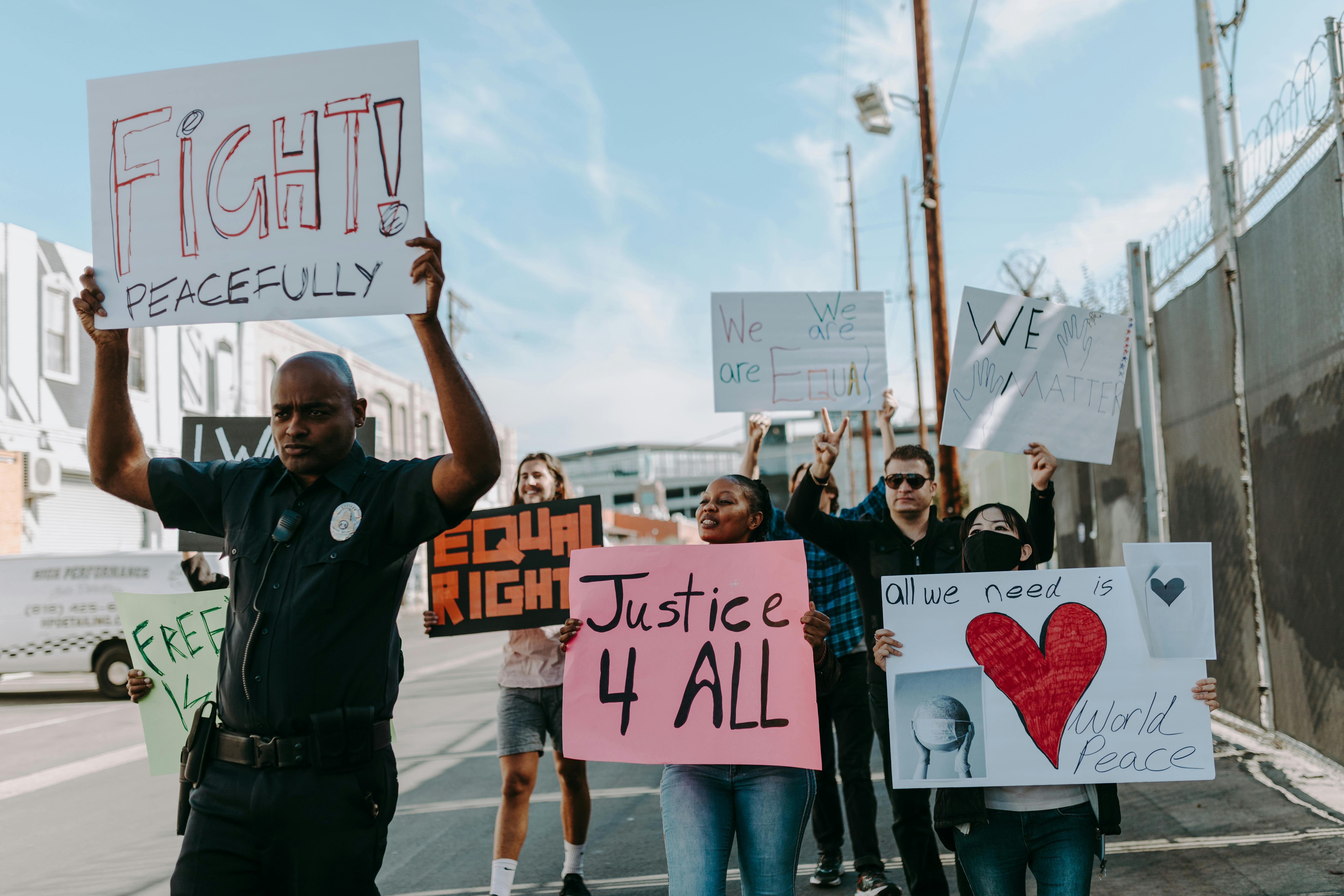
People protesting in streets
Image: RDNE Stock project via Pexels

Comedian Jimmy Kimmell was taken off the air last month. The people of the United States got him back on, in just a week. Within that week,
ABC’s parent company, Disney, lost $6.4 billion, with nearly $4 billion evaporating within 24 hours.


I was one of thousands who
wrote a protest letter—where I noted (and supported with reference links) that only one word of his statement was even an opinion and the rest was documented fact. And although I’m not a regular Disney customer I was able to find a bit of economic leverage to use as well.


A housewife in Niagara Falls, NY became concerned about toxic dumping in her neighborhood, Love Canal. She organized her neighbors and, eventually, many other communities.
The Superfund toxic cleanup program, signed into law by President Jimmy Carter in 1980, was a direct result of her efforts. And Lois Gibbs went on to get McDonald’s to switch away from Styrofoam to paper and to get Target to steer clear of toys with PVC.


A developer announced a mountainside housing development planned to abut a much-loved adjacent mountain that’s a state park. After reading a bunch of prominent local environmentalists bemoan the project but say there was nothing we could do,
I personally founded the movement that defeated it in just over a year (this is an archived page; the website was taken down). Even I thought it would take five years. But we got thousands of people in and around our small town involved, passed three pieces of protective legislation, and then worked with the state to protect the land forever.


Around the world, for generation after generation, citizens have banded together to oppose and even overthrow repressive governments through nonviolence and noncooperation. Examples include South Africa, multiple countries in the Arab world (
Arab Spring), the former Soviet bloc, and Latin America.


While it’s true that there’s been significant backsliding away from democracy, notably in
Hungary and
Egypt, it’s also true that many of these revolutions overthrew entrenched and nasty governments that were not afraid to attack their own citizens.


All these movements—local or national, aiming for the stars or simply changing a local ordinance—started with one person who refused to take “nothing we can do” for an answer. As individuals, we often feel powerless—because acting alone, we can’t change much. But acting with others, we start movements that can get needed changes, even regime changes.


As businesspeople, we already have more influence than other citizens. Our actions also have more visibility—and, as Disney, Target, and many others are finding out, we are easier to hold accountable by the public. When a repressive government tells you to comply with its whims, don’t just say no. Tell your supporters, stakeholders, vendors, elected officials, etc. Remind your Board of Directors (if you have one) that enablers of totalitarianism are outed, boycotted, protested, shamed, etc. While risking the government’s wrath is scary, building support from the public dramatically lowers those risks and avoids the public backlash.


Next month, we’ll talk about some specific levers of change.

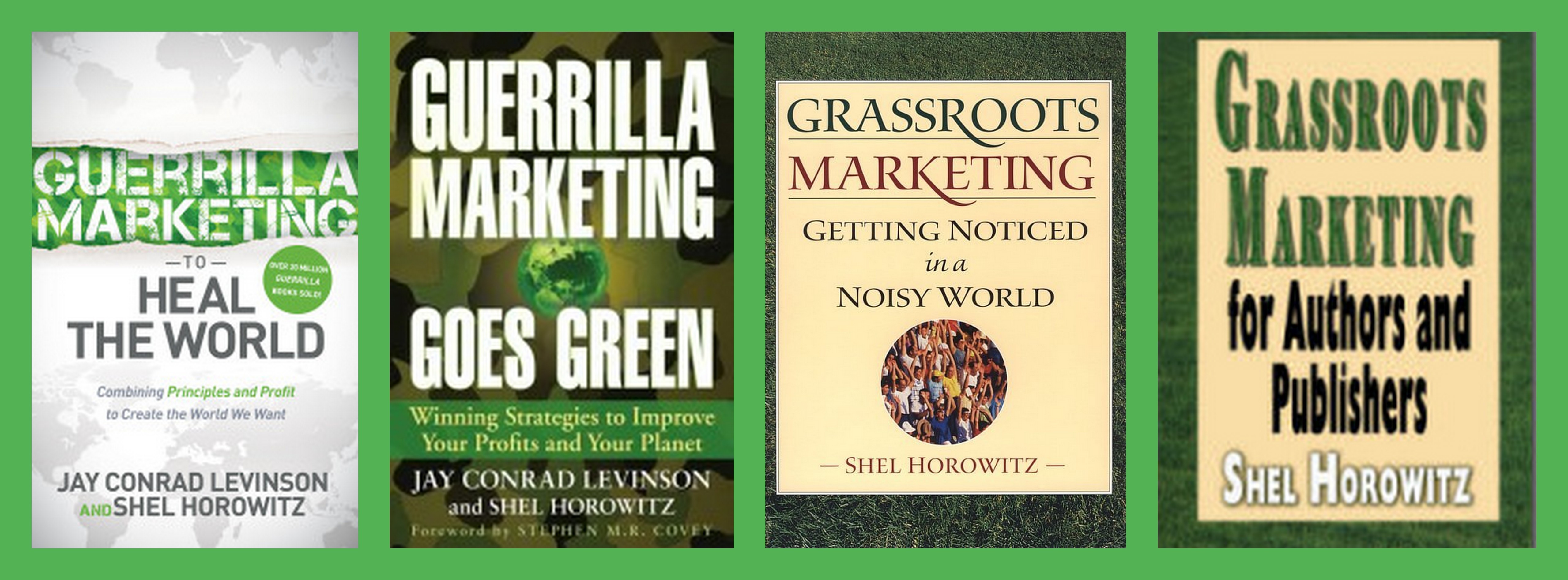
Discover why Chicken Soup’s Jack Canfield, futurist Seth Godin, and many others recommend Shel’s 10th book, Guerrilla Marketing to Heal the World (and download a free sampler). Autographed and inscribed copies available.
East Trade Winds Networking Group
I’ll be giving a short 15-minute presentation in environmental and social good as a profit strategy for the East Trade Winds networking group on Tuesday, February 10, some time between 8-9 a.m. Eastern (5-6 a.m. PT). It’s free to register for the weekly calls; here’s the link.

Freedom Over Forty Summit

Reclaim your life, rewrite your story, and create your own definition of success.
What You’ll Experience:

  • Health & Vitality – Feel better than ever in your 40s, 50s, and beyond.
  • Mindset & Purpose – Break free from restrictive patterns and embrace your true self.
  • Money & Freedom – Support your chosen life.
  • Relationships & Lifestyle – Surround yourself with people and activities that light you up.

Event Details:

View highlights from (and listen to) more than 30 podcasts ranging from 5 minutes to a full hour. Click here to see descriptions and replay links.

From Ellen Finkelstein:

A couple of friends have been frustrated by not seeing progressive politicians or well-known thought leaders offer positive ideas for improving life in the United States. So we decided to create a place for anyone to post ideas on a variety of topics, such as gun violence, healthcare, homelessness, poverty, immigration, and more. And we hope people who can implement them will notice. It’s a simple site but it works.

Please post your ideas here and then share the site! https://www.project2029.community

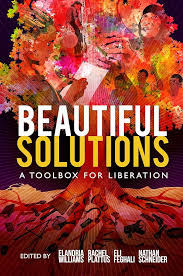
Beautiful Solutions: A Toolbox for Liberation

Hands Across the Hills

Beautiful Solutions: A Toolbox for Liberation

Edited by Elandria Williams, Rachel Plattus, Eli Feghali, and Nathan Schneider
(OR Books, 2024 under Creative Commons)

From 1968 to 1971, a guy named Stewart Brand published a series of Whole Earth Catalogs: resources to help people who were part of the back-to-the-land movement.
Beautiful Solutions switches the focus to activists, makes it global, and brings the concept forward to our own time.


The book makes no secret of its biases toward collectives and co-ops rather than corporate capitalism, toward factory and agricultural workers controlling their own destiny and their own working conditions rather than taking orders from some isolated executive, and toward collaborative, multidisciplinary/intersectional, egalitarian forms of decision making and shared responsibility rather than rigid hierarchies and departmental silos.


The book design and the organization of the text work together to keep things as accessible as possible. The material is divided into several overarching sections: Introduction; Food & Agriculture; Land & Housing; Education; Media & Information; Health, Art, Culture, & Spirit; Utilities & Energy; Manufacturing; Finance; Justice & Safety; Governance; and Outro (back matter), each with an introductory two pages addressing these questions: “What is at stake? What is possible? What could happen if we lose? What are some of the strongest forces against us? What are some of the most promising strategies? How are we making beautiful trouble? How can we heal? Who can we learn from?”


Each section is broken up into much smaller pieces, typically two to five pages, each labeled as a Story, Solution, Principle, or Question. Each acknowledges the people who wrote it—and also the mentors who showed the writers what they were doing and guided them to understanding—with brief blurbs. And each has at least one place to go to learn more: a website, a book, a film, etc. The layout is designed to scan easily and keep like concepts together.


Although right at the beginning, the book emphatically declares that it is NOT an encyclopedia, manual, or shortcut (p. 7), I’m calling it a resource manual. Here’s the mission statement/self-description:

Beautiful Solutions is a collaborative project that highlights many interlocking pieces of a complex puzzle. It helps us to see where pieces are missing and brings us closer to putting the whole thing together. By featuring examples from every area of our economy… Beautiful Solutions demonstrates that another world is under construction (p. 2).

The book aims to “Put you in charge…Give you the tools…Get you connected…Change the story” (each of these begins a descriptive paragraph, p. 5). And it recognizes that this journey has many paths. As an example, the first page in the first content section (food and agriculture, p. 29) jumps right in with eleven regenerative strategies before getting into specific projects.
You’ll meet dozens of people like:

  • Bren Smith, a fisherman who was wiped out by Hurricane Sandy, then launched Greenwave, a “regenerative ocean farming” experiment that has trained 8000 farmers to “grow only zero-input species that won’t swim away and don’t need to be fed.” That might include kelp, scallops, mussels, and oysters, among others (p. 40).
  • Rubin and Dawn Welesky, founders of Conflict Kitchen, a restaurant that rotates cuisines from various conflict zones around the world, thus de-demonizing so-called enemies (pp. 174-176); the restaurant even used online technology to join two sets of diners in Tehran and Pittsburg, cooking and eating the same meals at the same time.
  • Nancy Neamtan of Le Chantier de L’economie Sociale, a Quebec-based organization that promotes economic growth through federations of smaller businesses, rather than scaling up to a crushing corporate behemoth focused only on the single bottom line (p. 319).

And discover projects and concepts like: the solidarity economy (pp. 85-86); Berea College (Kentucky)—built on racial equality and low tuition made possible by student labor (pp. 91-94); La Coperacha, a Mexico-based cooperative of journalists doing deep reporting without the constraints of corporate or government media owners (pp. 126-129); a broad range of disability justice perspectives that includes less common, less visible issues like literacy (pp. 137-138), medication affordability through public ownership (pp. 144-147), and much more; a Philippine city that embraced zero-waste and lowered its costs from 70 mm to just 12 mm pesos per year (p. 208); a worker-owned sewing co-op that kept mills busy and mill workers employed during COVID, making masks and other protective equipment (p. 227); the restorative justice process that a hate-crime perpetrator and the community he attacked went through in New Zealand (pp. 276-277); a global citizen-participatory municipal budgeting process that began in Brazil (pp. 305-308)…

Connect with Shel

Turn Your Sustainability/CSR Report Into Powerful Marketing!  http://goingbeyondsustainability.com/turn-that-nobody-reads-it-csr-report-into-a-marketing-win/

About Shel

Speaker, author, and consultant Shel Horowitz of GoingBeyondSustainabiity.com helps businesses find the sweet spot at the intersections of profitability with environmental and social good — creating and marketing profitable products and services that make a direct difference on problems like hunger, poverty, war, and catastrophic climate change. His 10th book is Guerrilla Marketing to Heal the World.

If you’re not already a subscriber, please visit http://goingbeyondsustainability.com and scroll to the very bottom left corner. You’ll find lots of interesting information on your way to the subscription form, too.

Links in this newsletter may earn commissions. Please click here for our privacy and endorsement policy.


Powered by:

GetResponse

Leave a Comment

Name: (Required)

E-mail: (Required)

Website:

Comment: