The Clean and Green Club, November 2025

<!doctype html>


Having trouble reading this as an email? Please visit thecleanandgreenclub.com to read it comfortably online.

Shel Horowitz’s Clean and Green Marketing Tip: November 2025

Extra Bonus This Month

Don’t skip the “new on the blog” section if speaking is any part of your communications mix. I thought seriously about making “Possibly the Best Speech I’ve Ever Heard, On Any Topic” my main article, because it’s a learning tool for speakers, whether they share his viewpoints or not—but I put it on my blog because it was timely and I wanted people to see it while the event was fresh. Think of it as a bonus main article ;-).

Easy Levers to Create Change
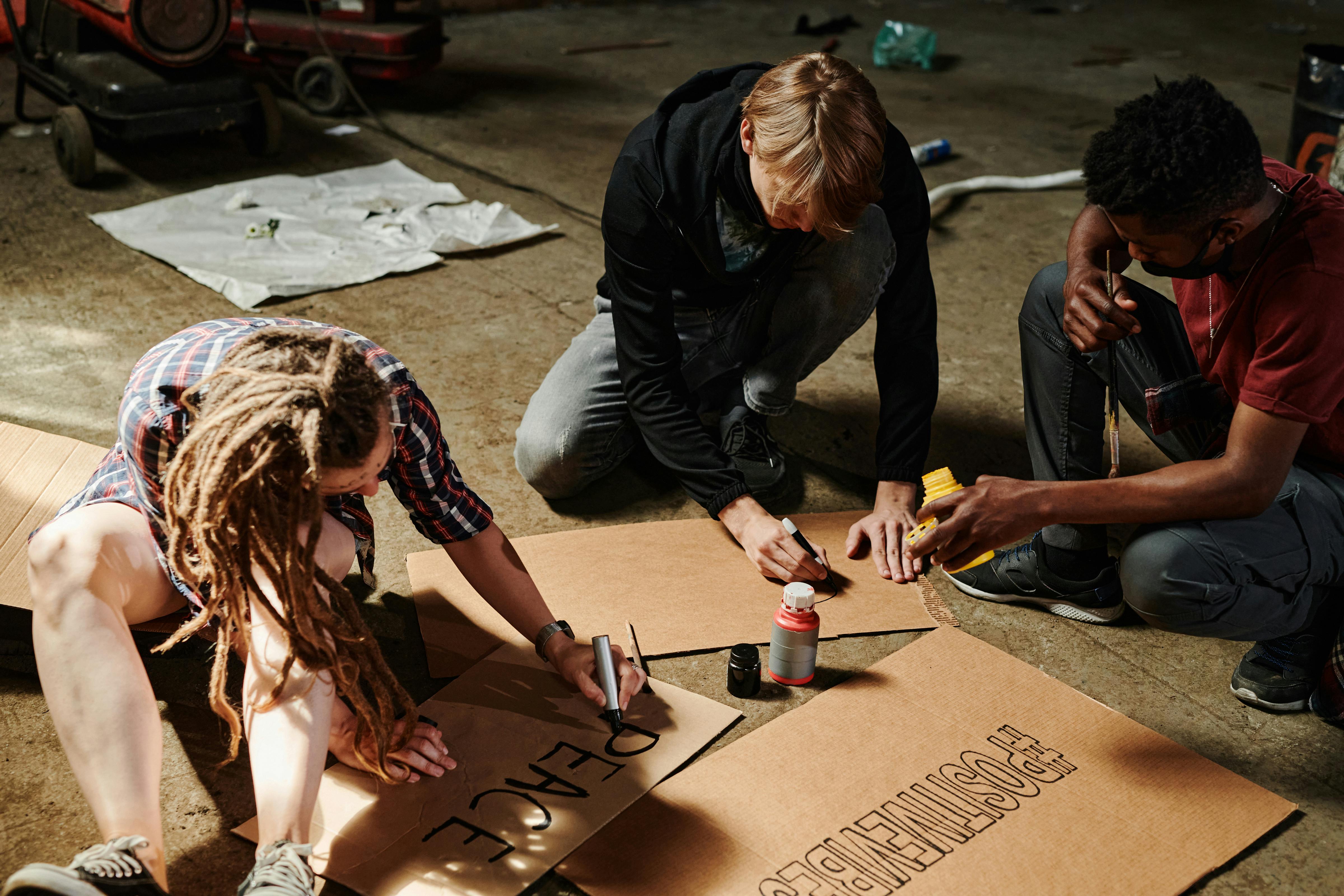
People making protest posters
Image: Mikael Blomkvist via Pexels

As promised last month when we discussed
the pressure campaign that got
Jimmy Kimmell back on the air after just a week, here are five among many tools that we as individuals can use to influence current events. And, with enough participants, create change.

  • Use our buying power.  ABC’s parent company, Disney, lost $6.4 billion, with nearly $4 billion evaporating within 24 hours.
  • Express our opinions: write letters to elected officials, regulatory agencies, and the letters column of your local newspapers. If you have no time to write a letter, someone has probably put together a petition. And when singing petitions, if you have the option of editing, change the subject line and lead paragraph, at least, even if you borrow the rest of the form letter. Individualized letters are taken far more seriously, especially if you say something about how this personally affects you and your family, or your community.
  • Join public protests. No Kings Day on October 18 had more than 7 million participants, from a couple of dozen people on the greens of tiny little villages to hundreds of thousands gathering in megacities.
    Given that many people had to work, were too disabled to attend, were afraid to go because they are the “wrong” skin color and might get thrown in an ICE hellhole or deported, or were otherwise unwilling to join, we can pretty much guarantee that each of us who attended represented at least one who did not.And that’s significant because it puts us well above the 3.5 percent of population that researchers Erica Chenoweth and Maria Stephan have shown is enough to nonviolently destabilize (and often collapse) a repressive government. So if the movement needs a general strike at some point, it’s likely to have enormous impact. Think Arab Spring, the overthrow of apartheid in South Africa, the US Civil Rights and Vietnam peace movements, and dozens of other examples.
  • Influence people in the institutional pillars to resist. Chenoweth, Stephan, Daniel Hunter George Lakey, and other nonviolence scholars posit that the strength of a regime rests on pillars such as government agencies, media, academia, and of course, police and military. If members of those institutions begin to resist illegal or immoral orders, withdraw cooperation, and find ways to aid the resistance, that government might topple very quickly. That model ended the Soviet Union, a global superpower second only to the US at that time, about 40 years ago—and except for the execution of Romania’s president, did so almost entirely without violence.
  • Withdraw support. This involves not just the risky actions of refusing to pay taxes or refusing to serve in the army (or in the parts of the army that are enforcing a dictator’s wishes against a resistant population, as we’ve seen for decades in the Israeli soldiers who refuse to serve in the West Bank and Gaza). It also involves creating and patronizing alternative institutions to bypass the oppressive ones. For instance, shop at food co-ops and local farmers markets, bank at community credit unions, fund investment through crowdsourcing, bike or take public transit to work instead of driving.

Again, this is the tip of the iceberg. Gene Sharp listed 198 nonviolent tactics, back in the previous century. Several researchers have updated them for our times. Start with https://commonslibrary.org/198-nonviolent-methods-upgraded/ , https://nvdatabase.swarthmore.edu/category/gene-sharps-198/other , and https://www.nonviolenceinternational.net/nv_tactics_book (that last one includes more than 140 new tactics). Happy reading, happy action, and happy achievement of change”!

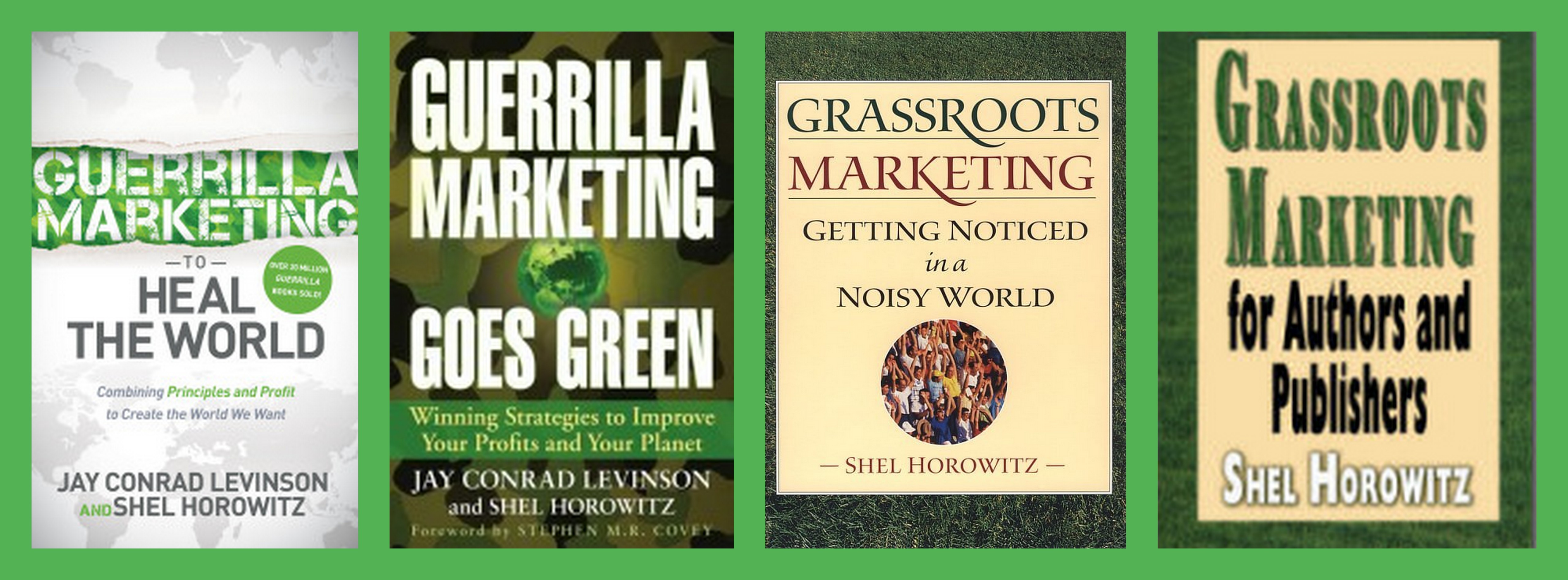
Discover why Chicken Soup’s Jack Canfield, futurist Seth Godin, and many others recommend Shel’s 10th book, Guerrilla Marketing to Heal the World (and download a free sampler). Autographed and inscribed copies available.
East Trade Winds Networking Group
I’ll be giving a short 15-minute presentation in environmental and social good as a profit strategy for the East Trade Winds networking group on Tuesday, February 10, some time between 8-9 a.m. Eastern (5-6 a.m. PT). It’s free to register for the weekly calls; here’s the link.

View highlights from (and listen to) more than 30 podcasts ranging from 5 minutes to a full hour. Click here to see descriptions and replay links.

From Ellen Finkelstein:

A couple of friends have been frustrated by not seeing progressive politicians or well-known thought leaders offer positive ideas for improving life in the United States. So we decided to create a place for anyone to post ideas on a variety of topics, such as gun violence, healthcare, homelessness, poverty, immigration, and more. And we hope people who can implement them will notice. It’s a simple site but it works.

Please post your ideas here and then share the site! https://www.project2029.community

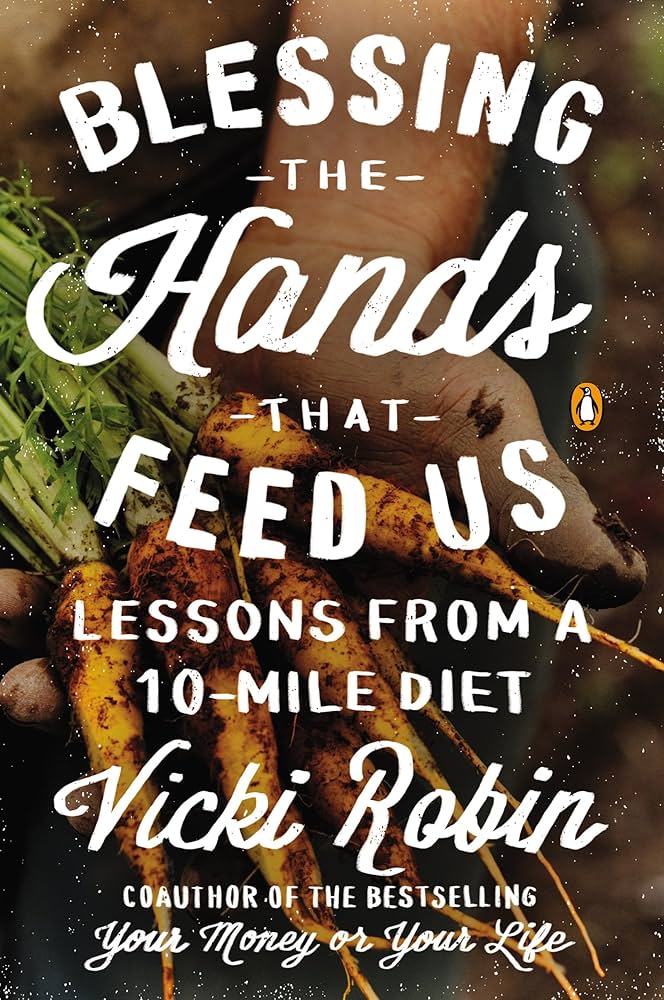
Blessing the Hands that Feed Us: Lessons from a 10-Mile Diet

Hands Across the Hills

Blessing the Hands that Feed Us: Lessons from a 10-Mile Diet
By Vicki Robin (Penguin, 2014)

Robin is the bestselling co-author of Your Money or Your Life (1992 )—which showed the world that sometimes, the big, fat paycheck in the corporate world was actually more expensive than the much smaller one for less prestigious jobs, once we subtract all the expensive trappings like fancy clothes, fancy house, fancy car—as well as the time and money costs of commuting, child care, etc.) and a well-known figure in people-centered economics. Decades later, she took on a new mission: understanding the food system, changing the way she eats, and helping others develop their own personalized ways to make similar changes.


First, she accepted a challenge from a local farmer to eat hyper-locally for a month: the “10-mile diet.” Succeeding with that during the abundant harvest month of September, she then challenged herself to see if she could get 50% of her food from a 50-mile radius—in the dead of winter (p. 155). And all along the way, from several months before the 10-mile experiment to years after her 50-mile February, she explores both her own relationships with eating, her body, and the place she’s chosen to live—and the wider social and economic issues of feeding her island, her region, and, spiraling out, the whole world.


This complex web of journeys surprises her in many ways—especially in the way “relational eating” turns out to be a powerful way to build community (p. 9 and throughout the book: “rather than feeling trapped, I felt held”, p. 199).


Robin had already been established on Whidby Island, Washington for quite a while and was active in the
Transition Towns movement there. But her exploration of local food took her well beyond TT’s potlucks. Using the same analysis skills in YMoYL, she started looking at what it would take for a community to be food-self-sufficient. She discovers why offerings from small, local organic farmers costs so much (pp. 156-157)—because of the many subsidies and unfair advantages industrial farming receives (p. 169), and because of certain obstacles put in the way of small farmers—such as needing to pay the same huge fees for organic certification but not having the economies of scale to amortize those costs over enough inventory to make it affordable (p. 211). She does recognize that industrial food from Big Ag plays important roles that small-scale local foods can’t, such as stocking food banks and other distributions to those without means and providing the convenience for those who don’t have the time or physical ability to focus on eating (pp. 169-173)—but her own eating patterns and her relationships with producers will never go back to her old ways that focused on food as fuel, obtained as cheaply as possible, eaten without much thought, and also without the extreme sensual pleasure that good local food often provides.

This book is personal for me. I decided to become a vegetarian at age 12 and carried out that decision four years later—after my mother extracted a promise to wait until I’d stopped growing. As this was before the Internet, I didn’t have the knowledge base to refute her. Ever since, I’ve been increasing the local (as well as the organic) components of my diet. Not counting restaurant meals or dining with friends who did the cooking, I probably source 95 percent of my vegetables and 50 percent of my fresh fruit from within 35 miles—with probably 80 percent of that 95 percent grown either at our organic CSA (Community Supported Agriculture) farm six miles (ten kilometers) away or in our own garden and most of the rest coming from either farmers markets or our food coop, which has many local farmers in its supplier network. Most of my dairy, beans, grains, seeds, and nuts come from much farther away, though. And I’ve wrestled with a lot of the same issues, especially since one of the four goals I build my speeches around is to see global hunger and poverty turned into abundance. (The others are turning othering into equity, war and violence into peace, and catastrophic climate change into planetary balance. Ambitious, I know—but also achievable.)


I took six pages of notes on this book. Here are a few more of my highlights where they first appear (many are repeated):

  • 18 questions to determine your unique relationship with food (pp. 22-23)
  • Why government subsidies of Big Ag make local food more expensive (p. 72)
  • 7 practices to increase your percentage of local food, including her own ten biggest factors in choosing food as well as ten main categories and a bunch of choices under each that you can sort through to determine where you will get your food (pp. 78-85)
  • How to learn (and modify) how you fit into your local food ecology (pp. 125-126)
  • The REAL (and not so economical) economics of fast food (pp. 134-137)
  • Understanding that when you travel, local is where you are, not just where you live (pp. 152-153)
  • The principle of subsidiarity (p. 191)
  • Receiving—and making—blessings (pp. 235-236) and hope (pp. 264-267)
  • How we can participate in rethinking and recreating a healthier ecology of food (Chapter 9)

Connect with Shel

Turn Your Sustainability/CSR Report Into Powerful Marketing!  http://goingbeyondsustainability.com/turn-that-nobody-reads-it-csr-report-into-a-marketing-win/

About Shel

Speaker, author, and consultant Shel Horowitz of GoingBeyondSustainabiity.com helps businesses find the sweet spot at the intersections of profitability with environmental and social good — creating and marketing profitable products and services that make a direct difference on problems like hunger, poverty, war, and catastrophic climate change. His 10th book is Guerrilla Marketing to Heal the World.

If you’re not already a subscriber, please visit http://goingbeyondsustainability.com and scroll to the very bottom left corner. You’ll find lots of interesting information on your way to the subscription form, too.

————–

Links in this newsletter may earn commissions. Please click here for our privacy and endorsement policy.


Powered by:

GetResponse

Leave a Comment

Name: (Required)

E-mail: (Required)

Website:

Comment: